

AYESHA SINGH
Ayesha Singh’s practice questions the hierarchies of socio-political power that are often associated with architecture and the many histories it can embody—those that are perpetuated and those that are omitted by time, or often design.
Within Contradiction pursues these conversations through public and private spaces in India’s capital city, New Delhi, where Singh grew up. The works respond to discourses around the significance of architecture as evidence of power, authority and change. Singh has spent the last year developing a new series of works that employ the visual vocabulary of familiar symbols, to reflect on the shifts that have continuously shaped the nation as we know it.
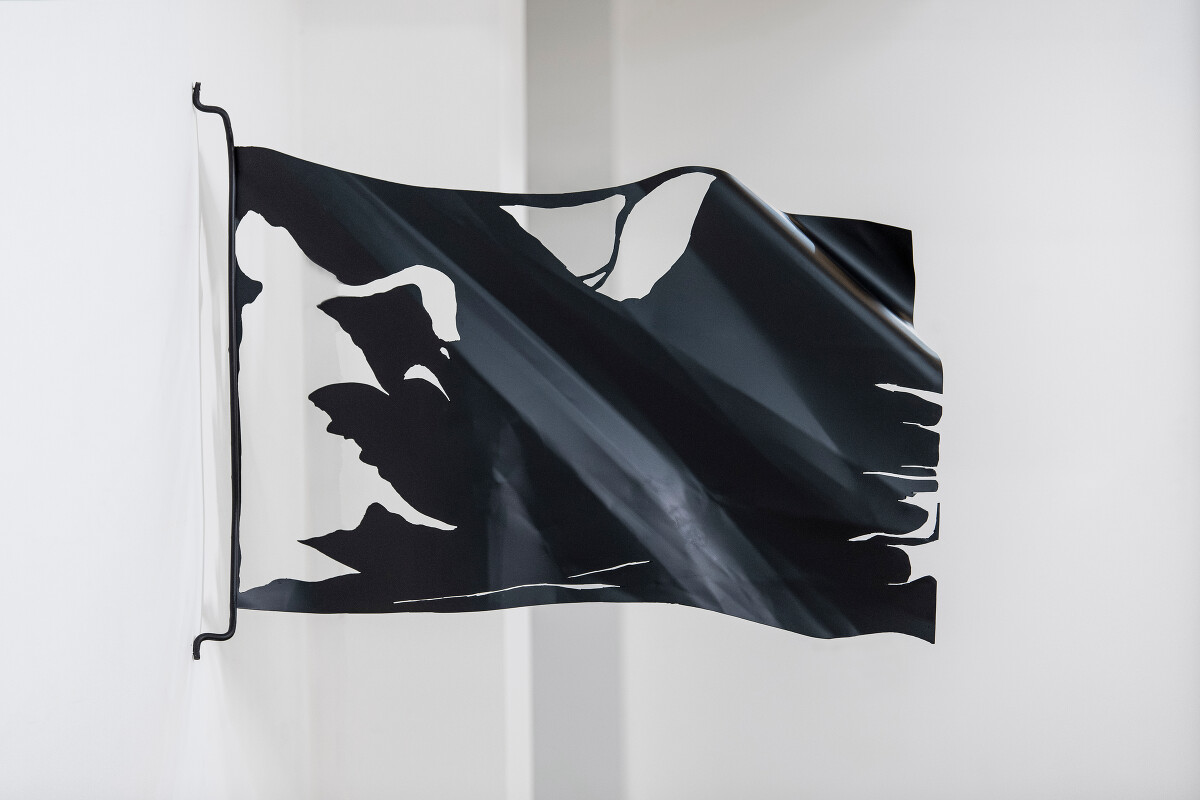
The Parliament Building, where decisions that shape the nation are made, is also a space that is itself being altered today.
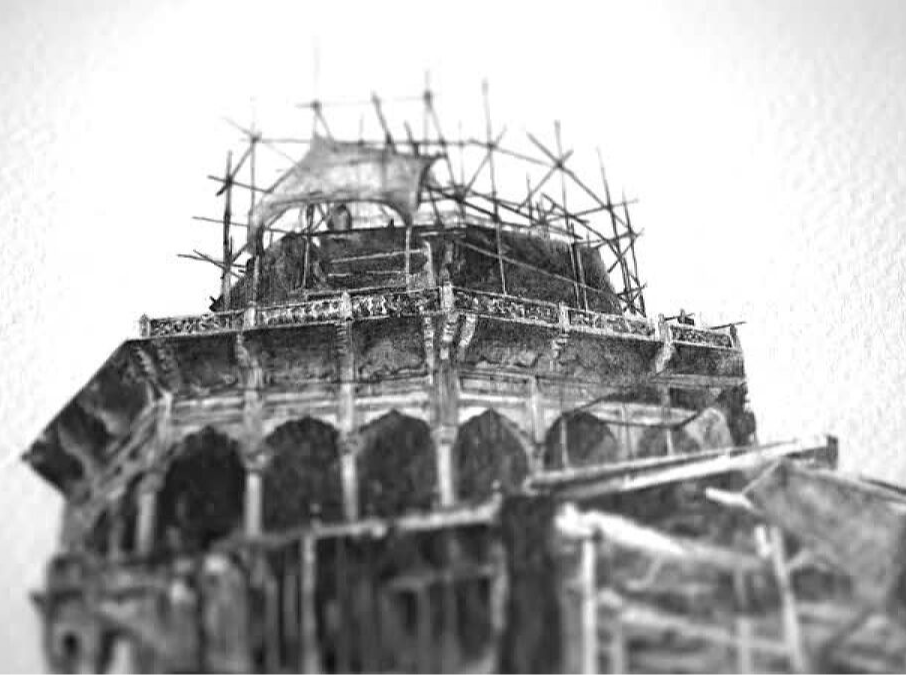
Flag (Warped) alludes to this state of transformation through the layering of the provisional scaffolding, which serves as a marker of the many architectural and structural changes taking place. Some changes are more concrete such as new constructions, while others rest in the potential for change presented by movements.
Images: Reproductions from Indian Summer: Lutyens, Baker, and Imperial Delhi by Robert Grant Irving, New Haven:Yale University Press, 1981.
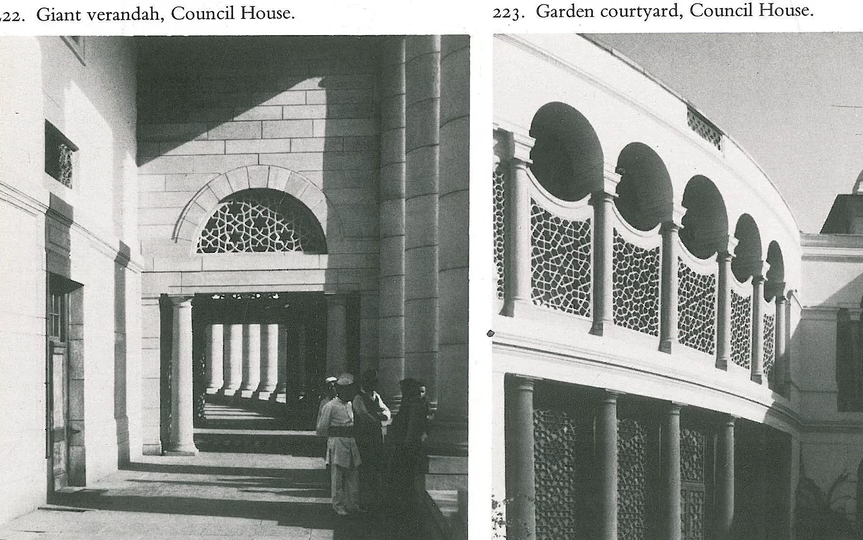
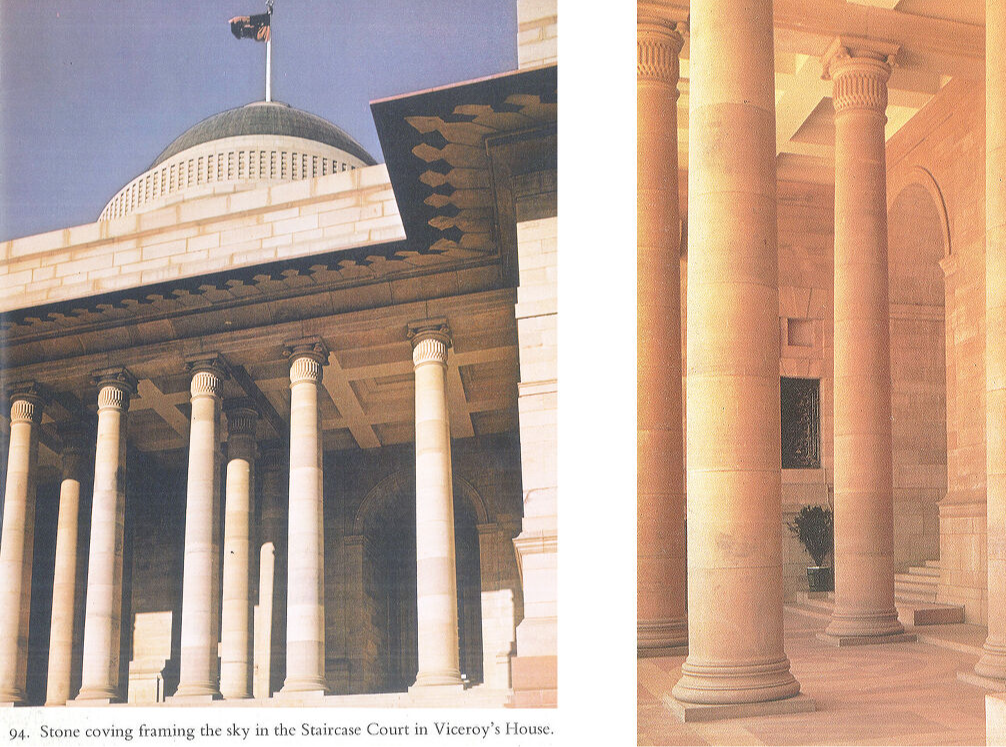
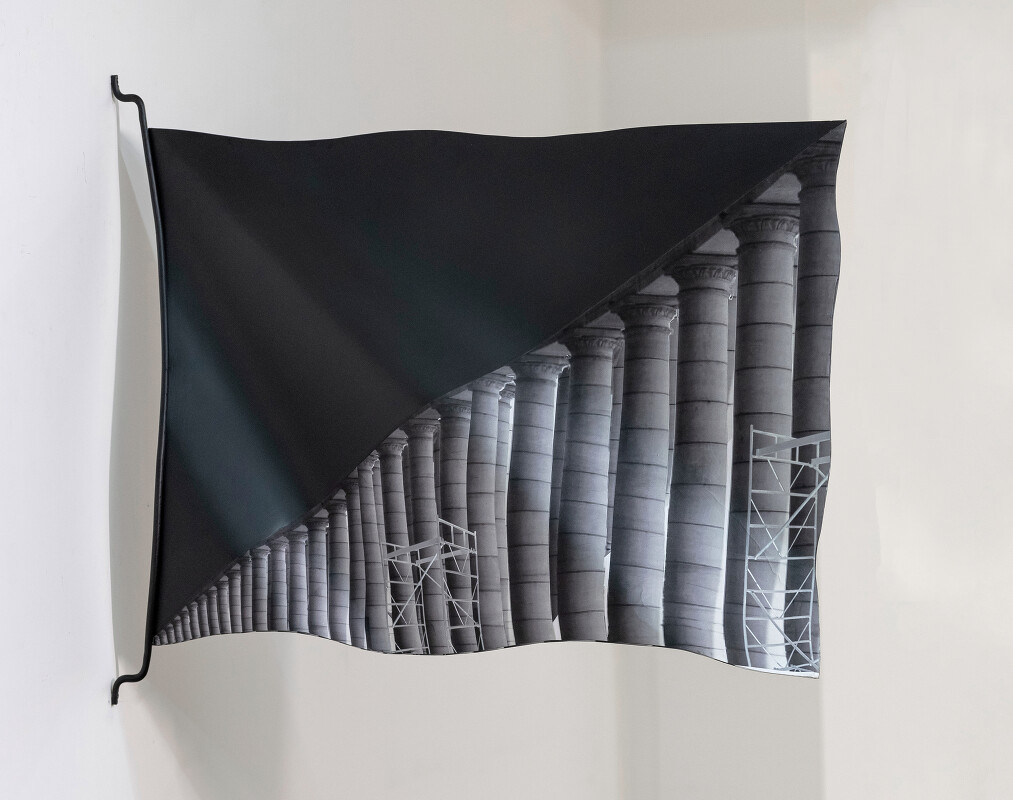
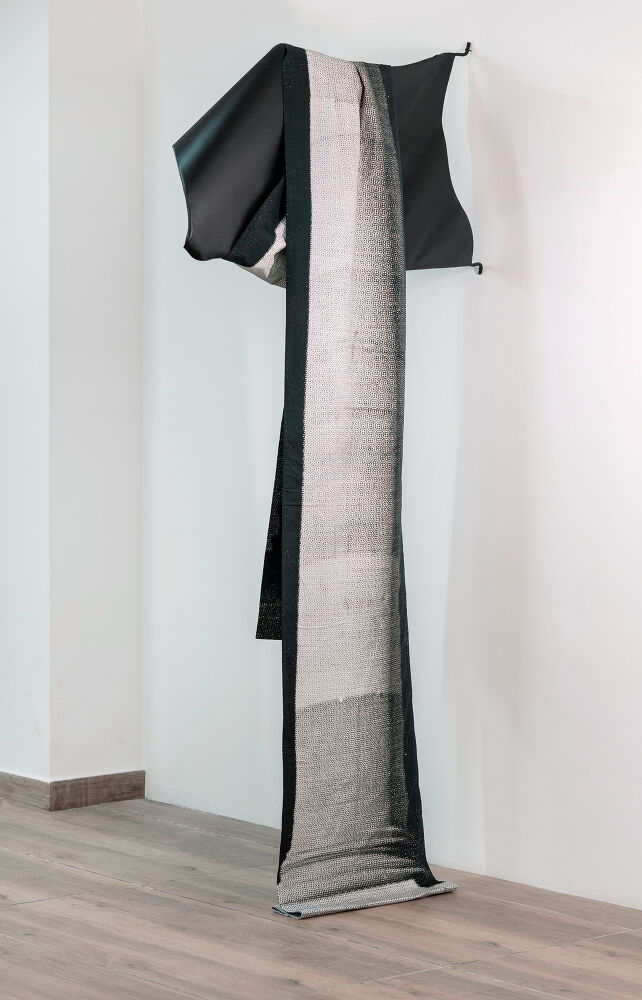
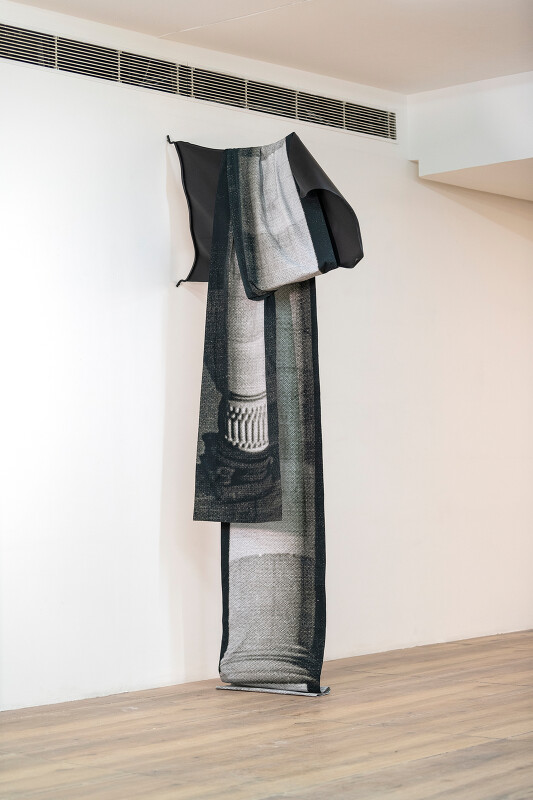
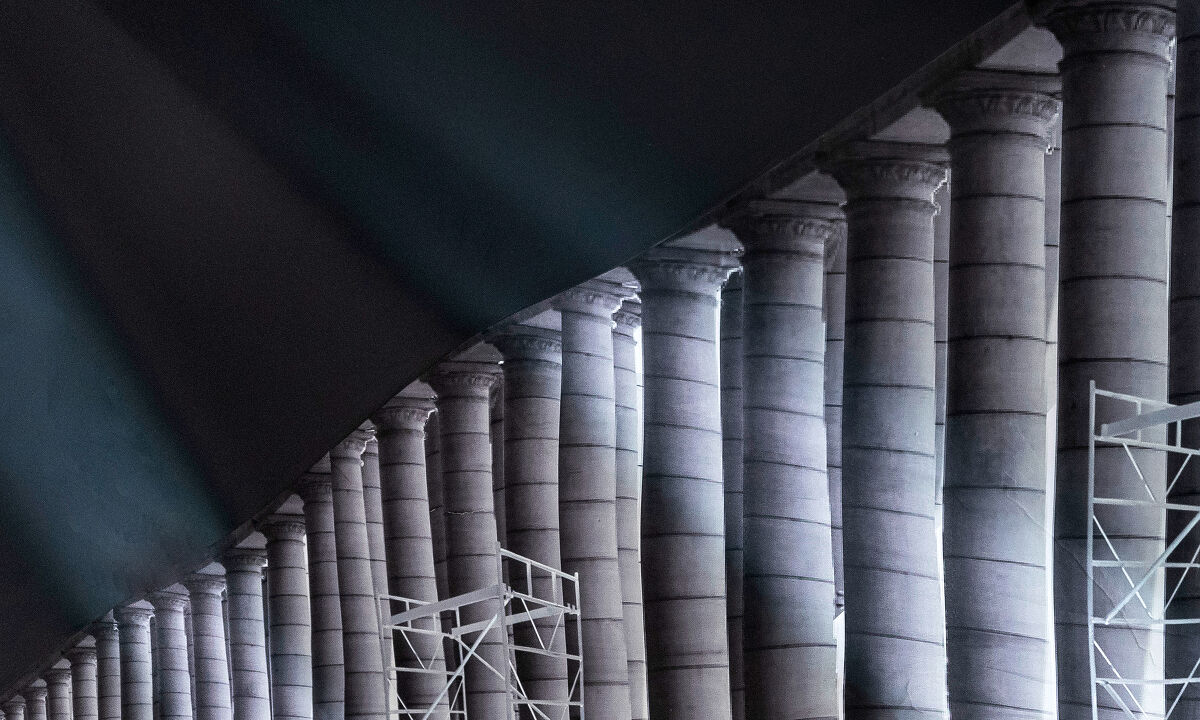
Akin to the Parliament building, Rashtrapati Bhavan is another monumental structure that is touted as a central pillar of our national identity. Defining the facade of its buildings are 227 Tuscan columns which flank the colonial construction that was originally built as the Viceroy’s House in 1912.
In Singh’s third flag, epitomized as a singular 227 inch fabric print, the column takes on a flaccidity, wrapping and constraining the now rigid flag that is halted in motion. The interdependence between the two also suggests a reliance on architecture to tether and uphold the weight of the systems in place, as is done by the two slight nails which anchor the metal flag to the building it is displayed within.
Images: Reproductions from Indian Summer: Lutyens, Baker, and Imperial Delhi by Robert Grant Irving, New Haven:Yale University Press, 1981.
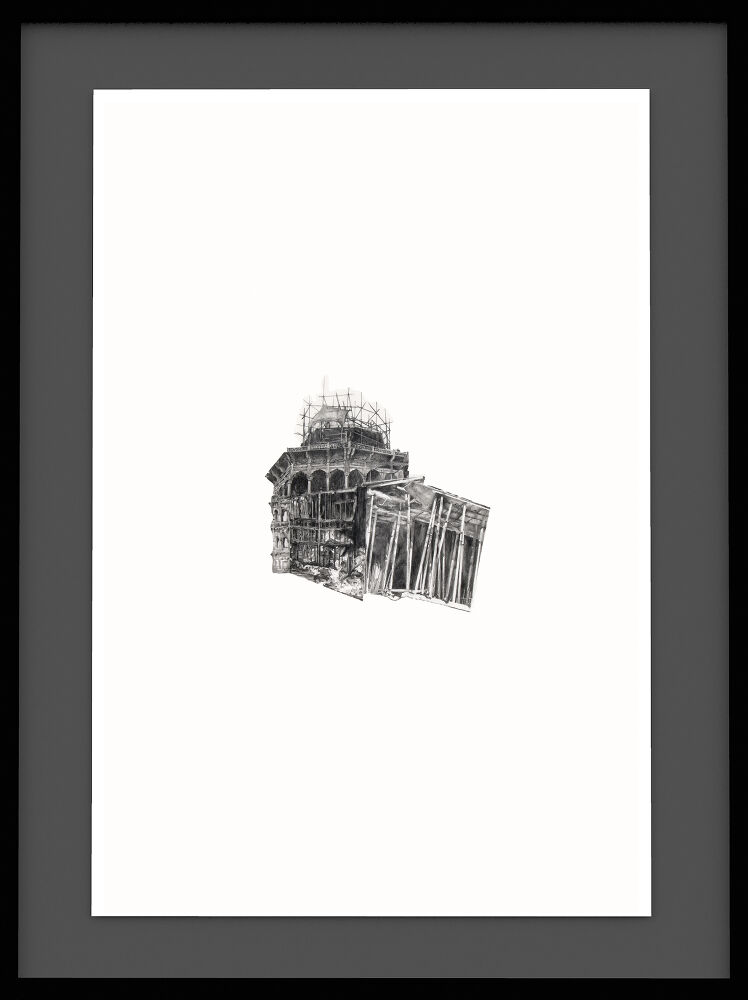
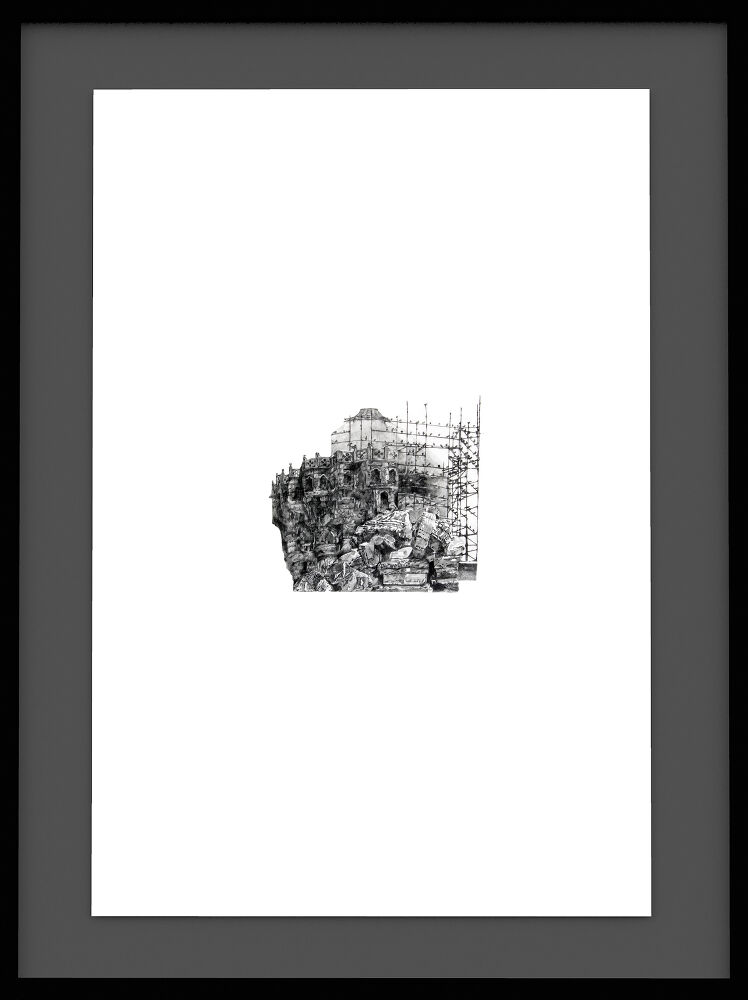
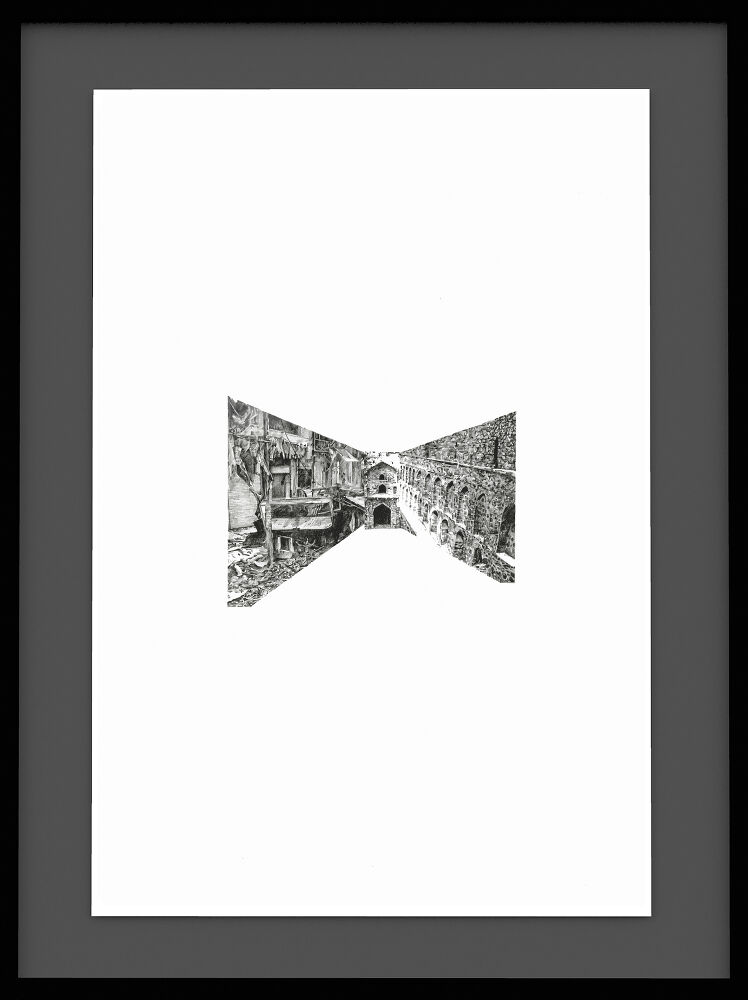
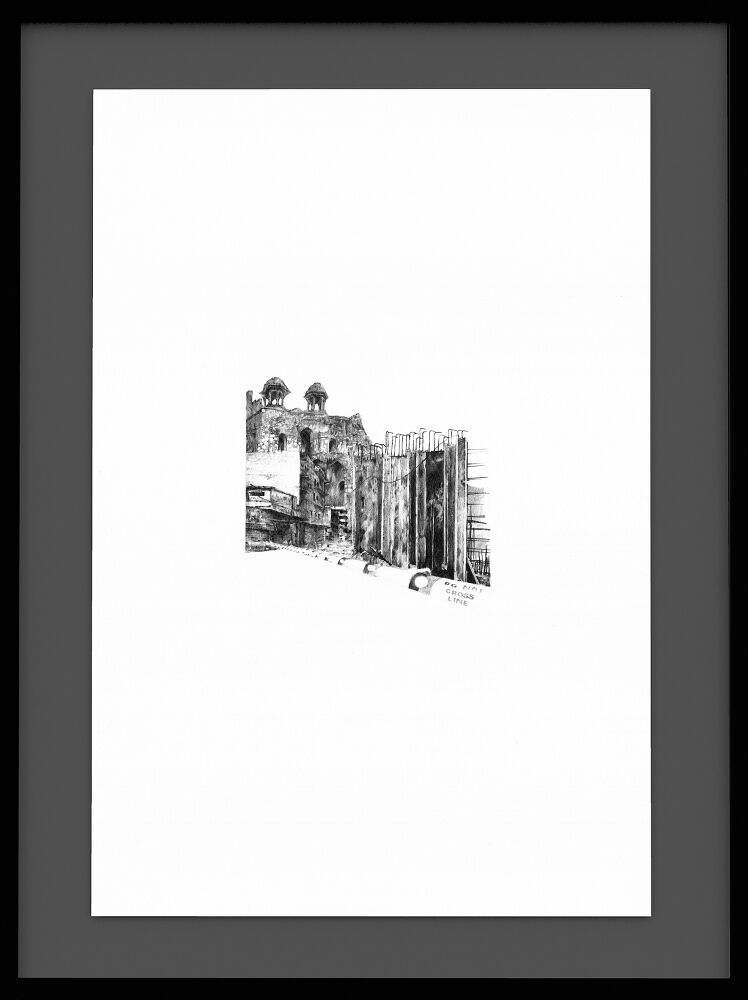
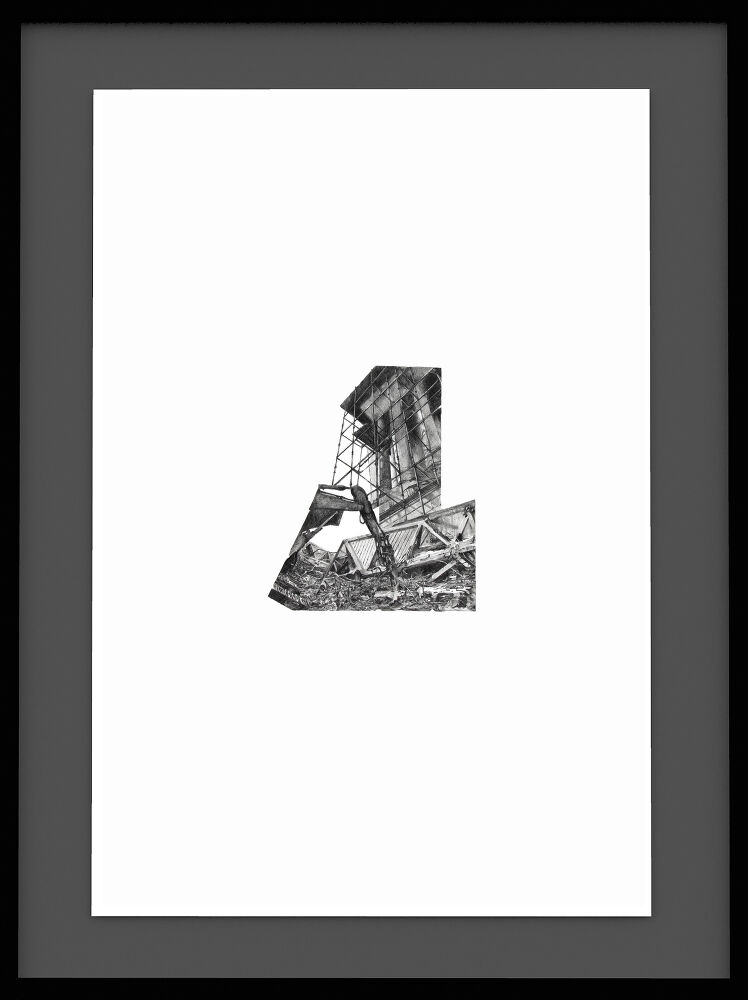
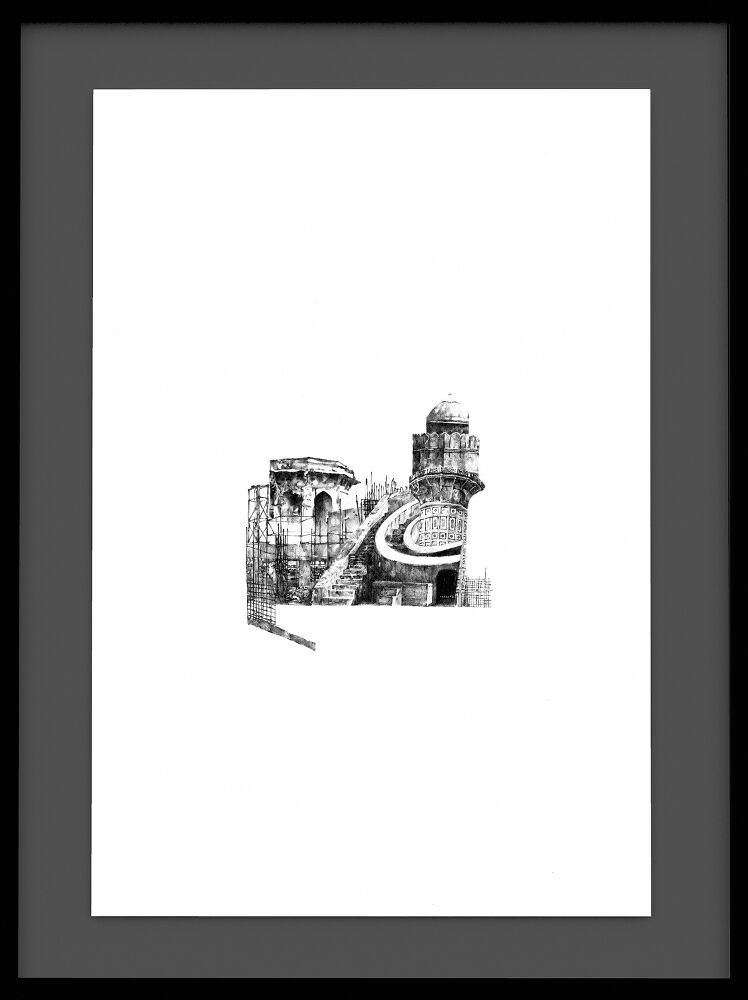
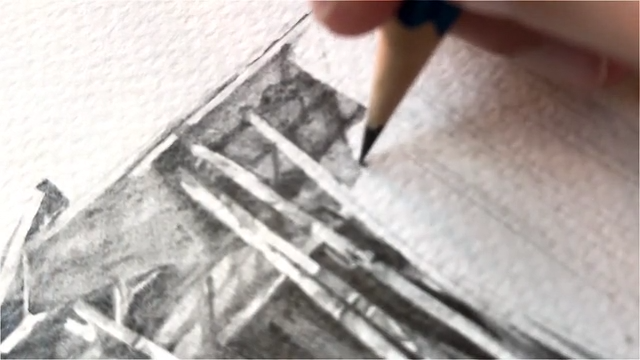
The Hybrid Amalgamation series are graphite drawings for possible totemic structures that combine elements of a city’s architecture from various cultures, religions and times. Layered onto one another, they present moments of reformation through the construction, restoration and destruction of architecture. The drawings include facades, fragmentations, skeletal frameworks and scaffolding; and through them the lives, stories and agency of people.
The artist will donate a percentage of sales towards the rehabilitation costs for families and individuals who were affected by the violence in North-East Delhi last year.
This exhibition could not have been realised without the support of:
Abhimanyu Dalal, Anushka Rajendran, Anshul Berera, Arjun Mahatta and team, Atmo 91 Aquarii Ab, Babu Khan and team, Bamby Singh, Divya Mahendru, Falak Vasa, Kiran Keshav and team, Kuldeep Sharma and team, Misael Soto, Nature Morte team, Noor Singh, Rajeev Surana and team, Satinder Singh, Sayantan Mukhopadhyay, Seetharam Vallabhaneni, Shreeya Sud, Srinivas Aditya Mopidevi, Tanuj Bhatla and team, Tarika Khattar, Veerangana Solanki.
Curated by Vidisha Aggarwal.
ABOUT AYESHA SINGH
Ayesha Singh (b. New Delhi, India) completed her MFA in Sculpture at the School of the Art Institute of Chicago; and BFA from the Slade School of Fine Art. She has exhibited solo and group shows worldwide including at The Sculpture Park Jaipur, Nahargarh Fort, Rajasthan, India (2018-20); Museum of Sichuan Fine Arts Institute, Chongqing, China (2018); Yorkshire Sculpture Park, UK (2017); Sullivan Galleries, Chicago, USA (2017); Casa de Dona Gisele, Curitiba, Brazil (2015); and at the University of Cambridge, Cambridge, UK (2014). Singh was recently awarded the Emerging Artist of the Year award from India Today (2020); and has won the Ellies Creator Award from Oolite Arts (former Art Centre/South Florida), USA (2018-19); the Civil Society Institute Fellowship at Vermont Studio Centre, USA (2018); and the Science & Culture Initiative Grant from the University of Chicago and the School of the Art Institute of Chicago(2017-18). Her work is a part of public collections including the Yorkshire Sculpture Park, UK, and The Partition Museum, India.
Singh is also the co-founder of Art Chain India—a peer-support movement for visual artists living and working in the subcontinent.