

Concrete, Dubai
Imran Qureshi
Vanishing Points
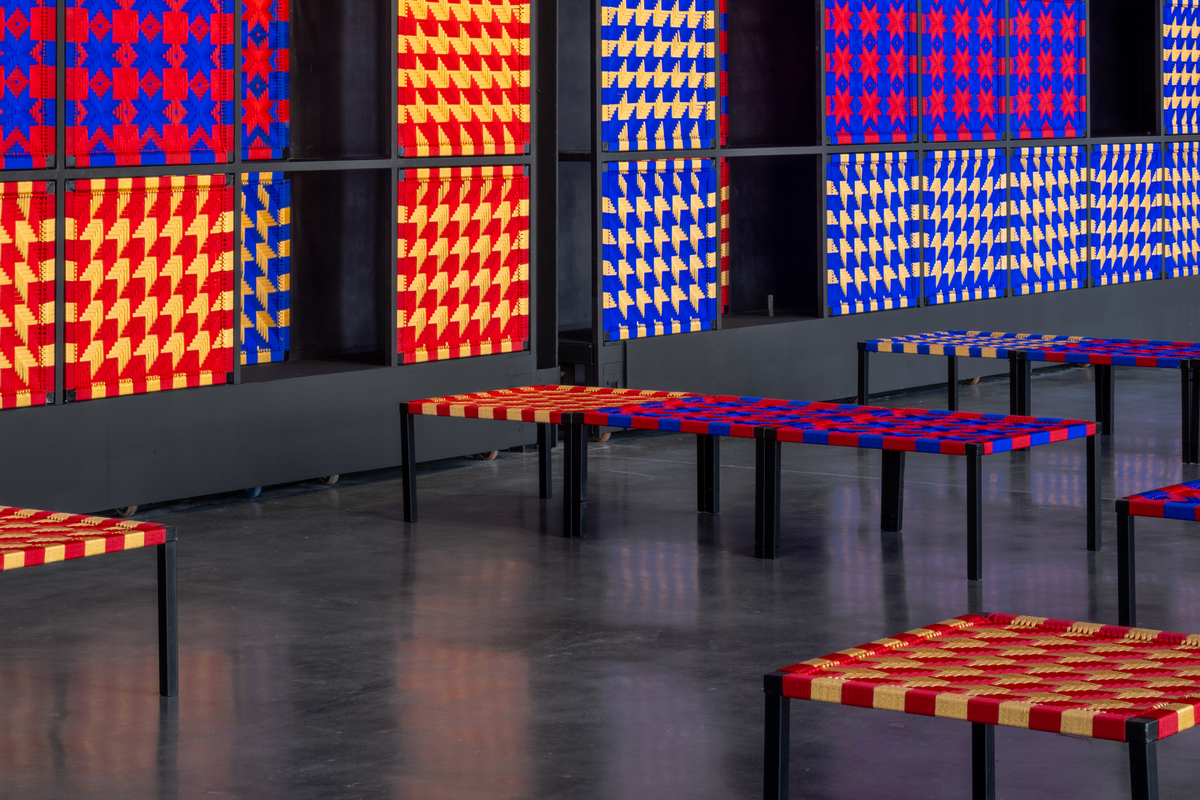
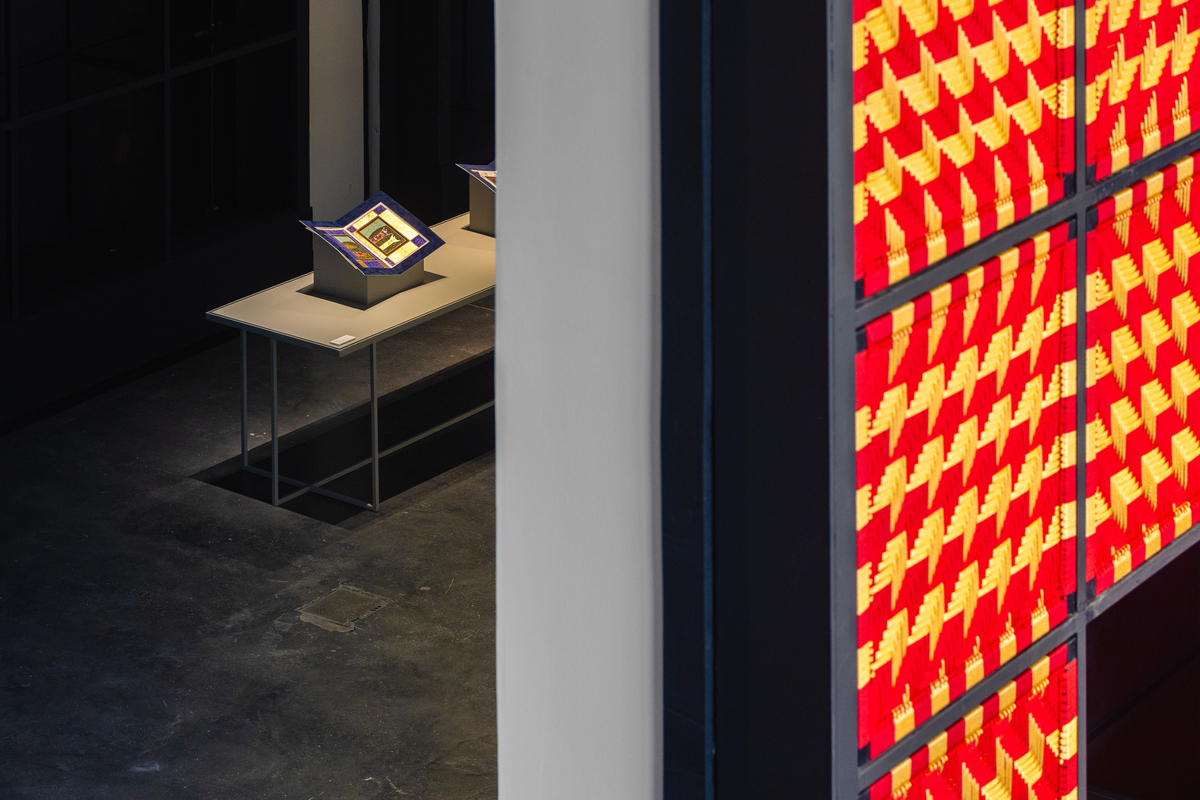
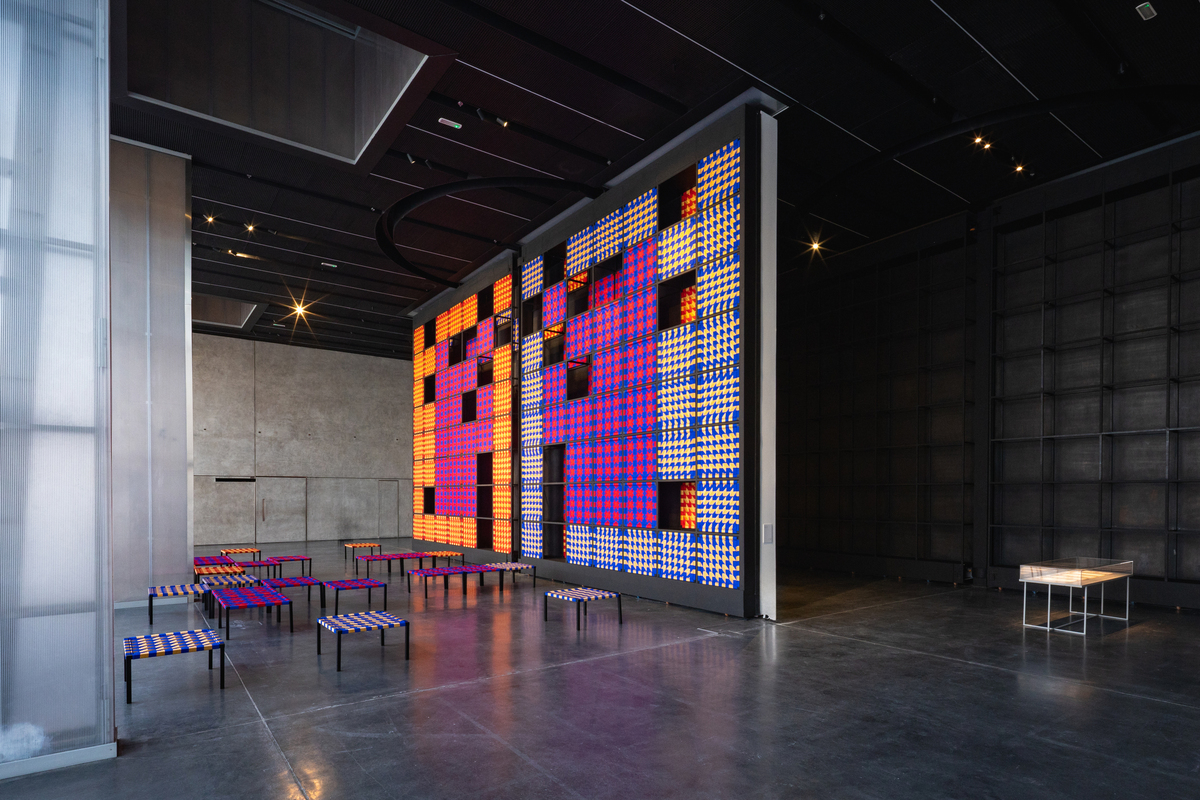
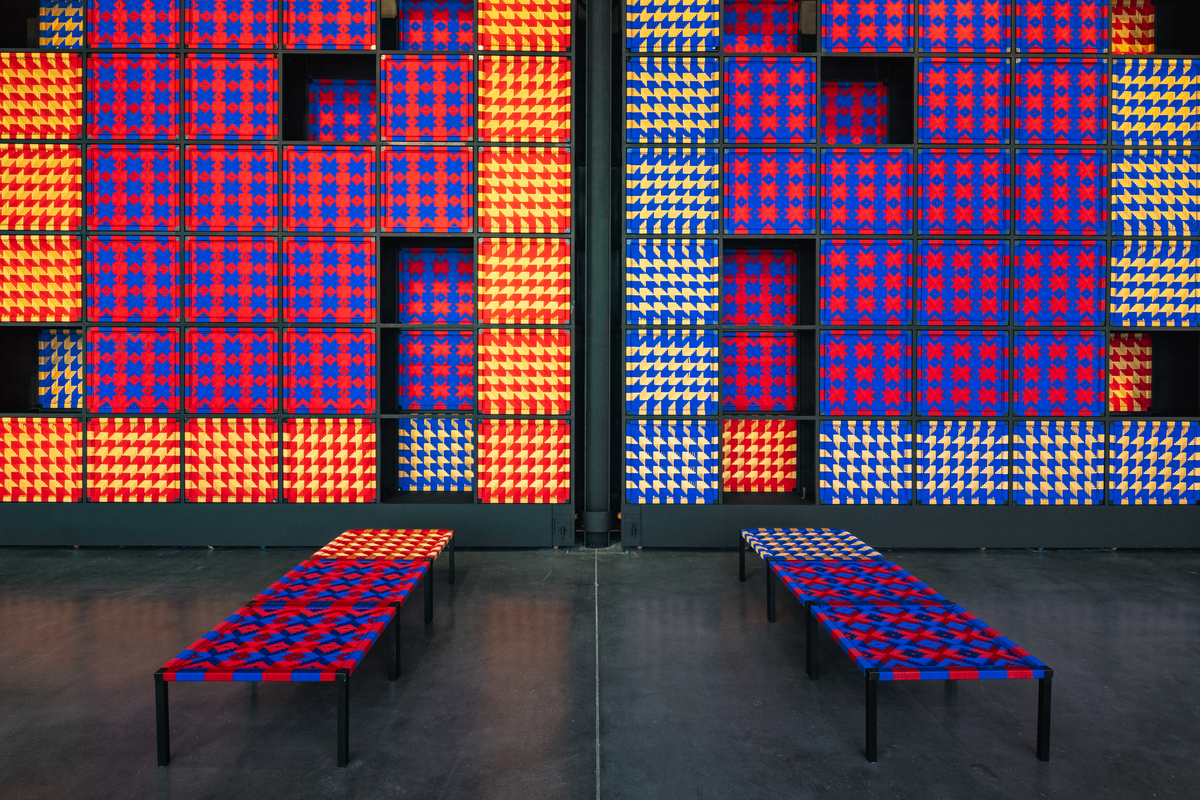
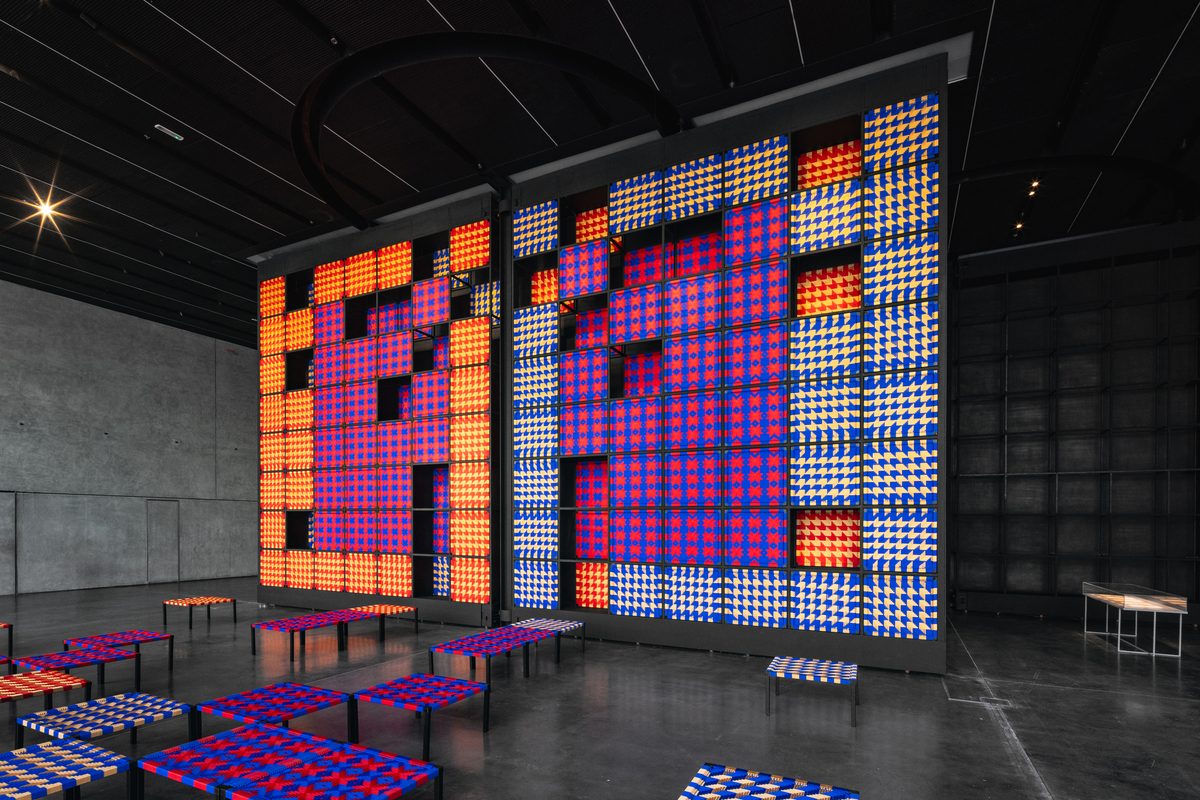
Behold the open pages of a manuscript, Opening Word of this New Scripture, which uses the internal architecture of Concrete as a scaffold for a new woven installation. Geometric patterns are woven from the bright colours of nylon rope used for the humble charpai, or common bed. The red and blue stars within the shifting patterns echo the palette the artist developed in response to the global impact of American interventionism, particularly in Pakistan. Echoing the embellished borders and frame within a frame device familiar to those who know the form of Indo-Persian painting, this spatial intervention also plays with our sense of depth perception and allows visitors to enter into and occupy the foreground.
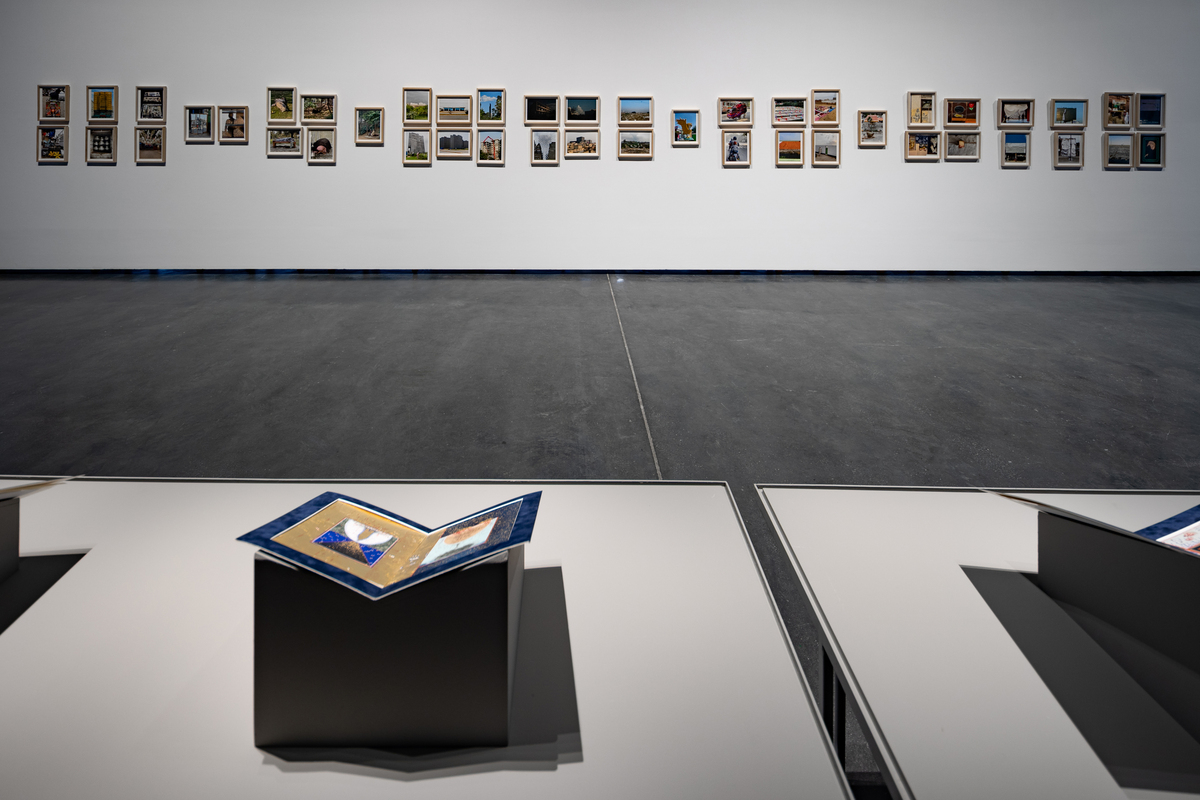
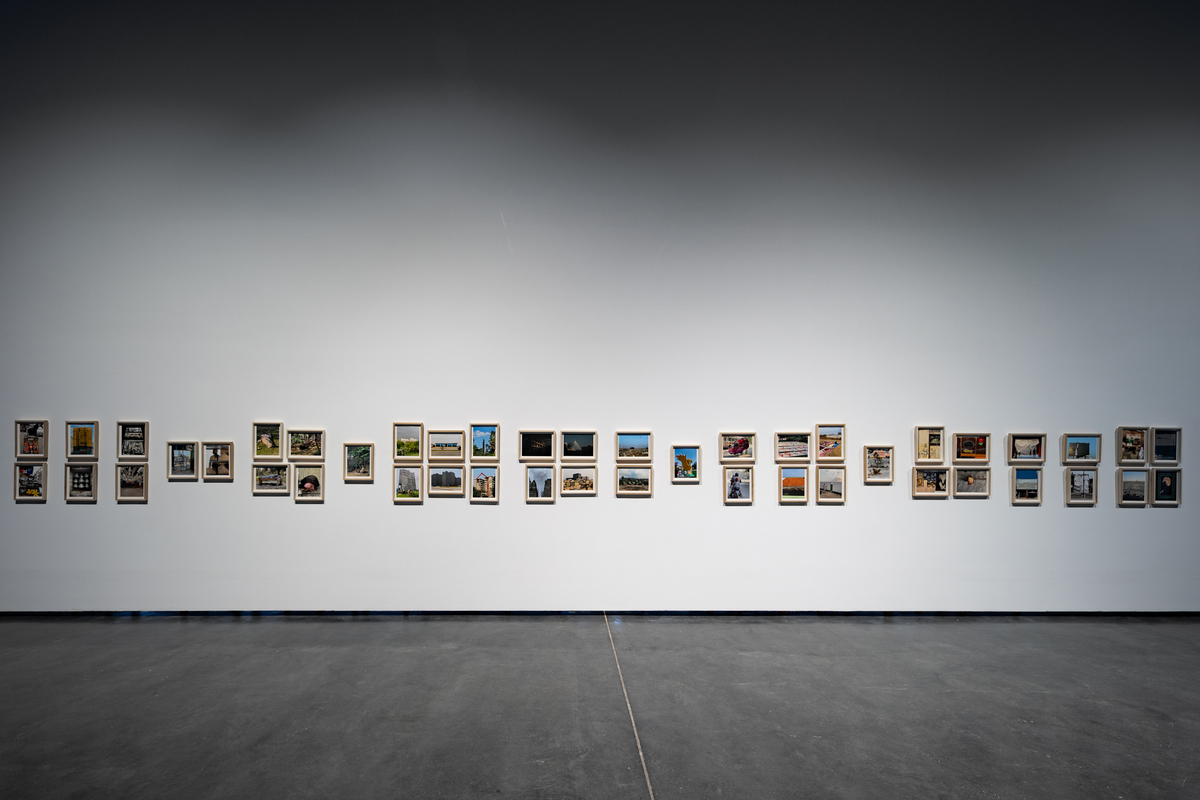
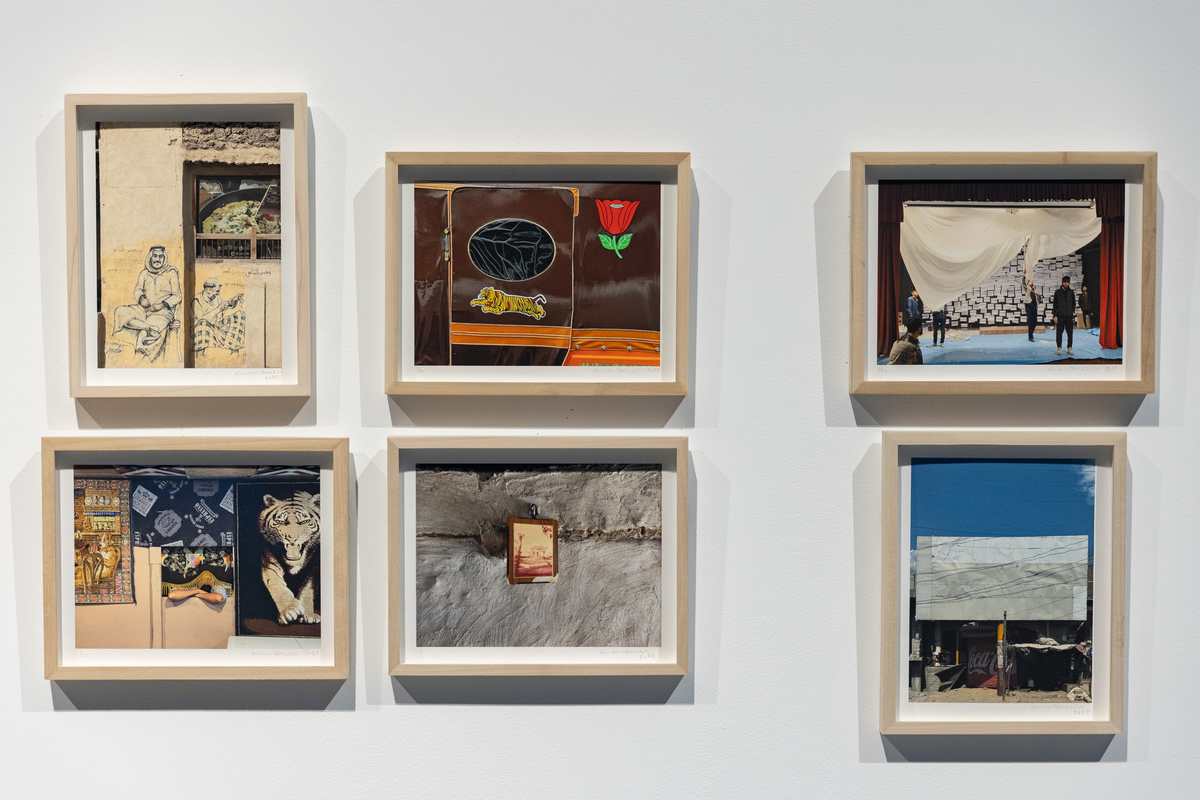
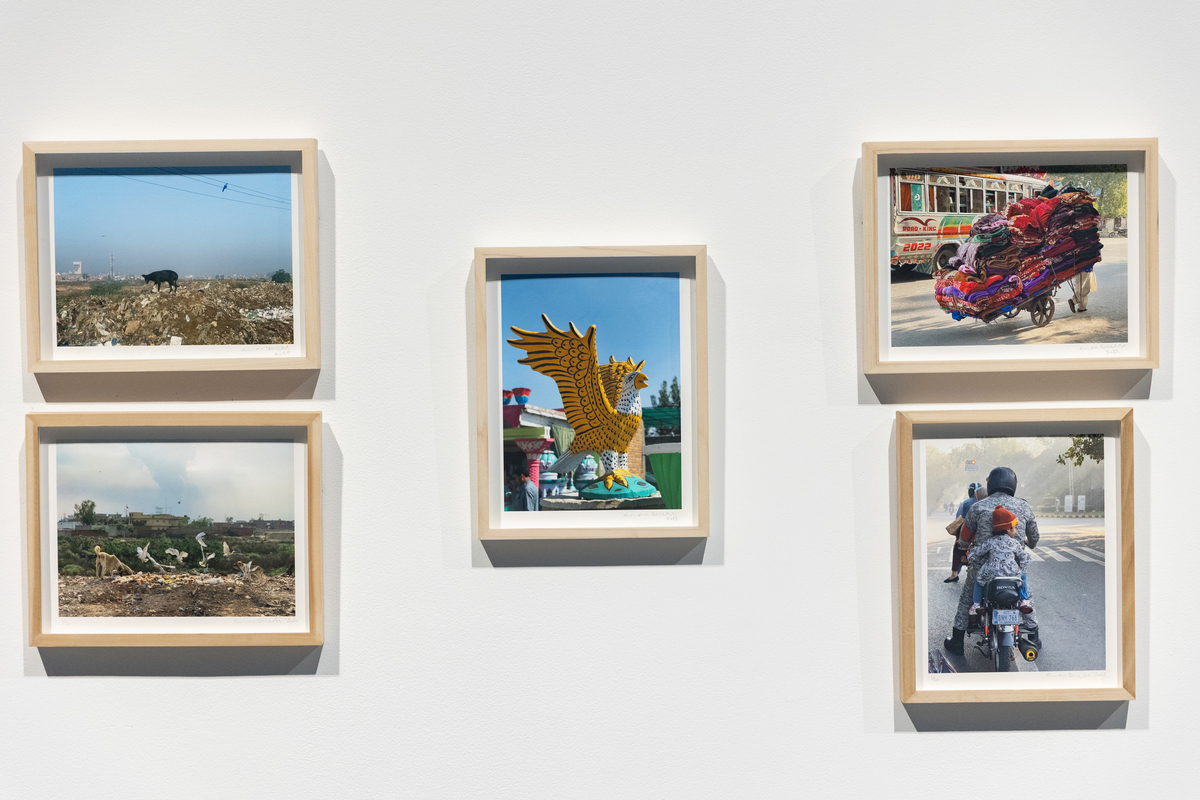
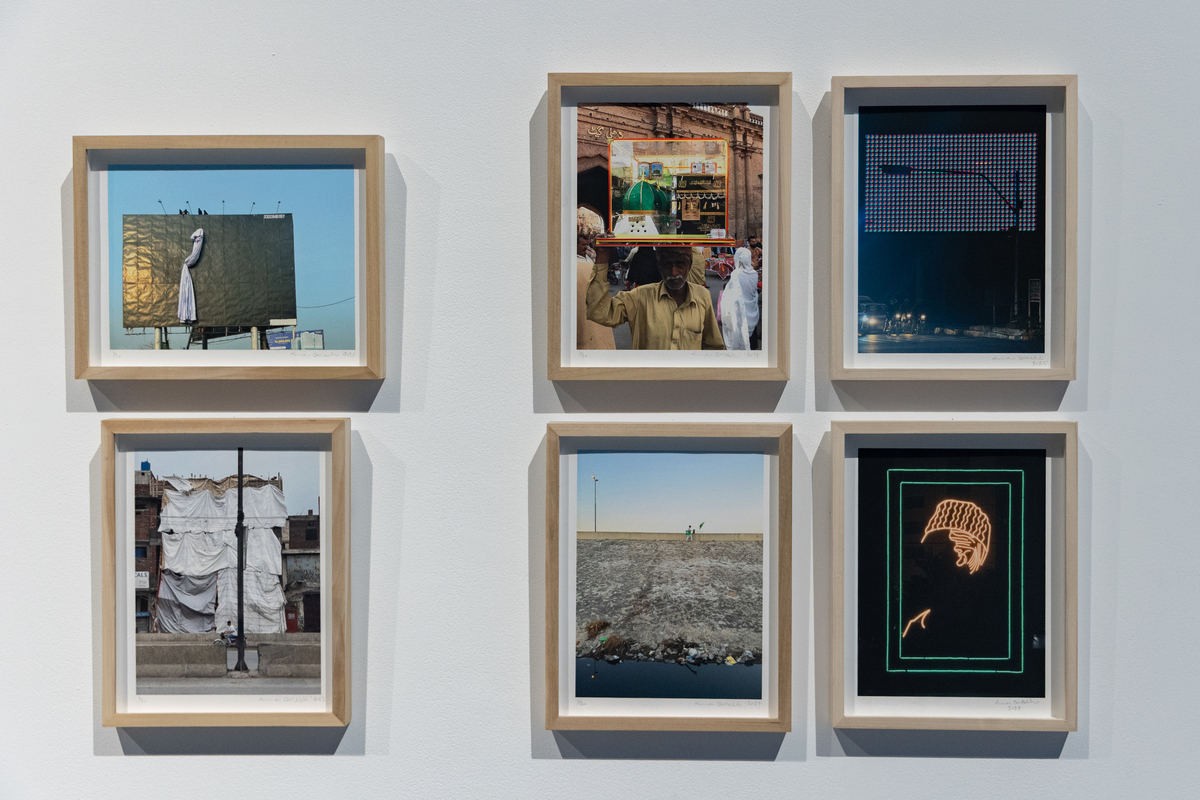
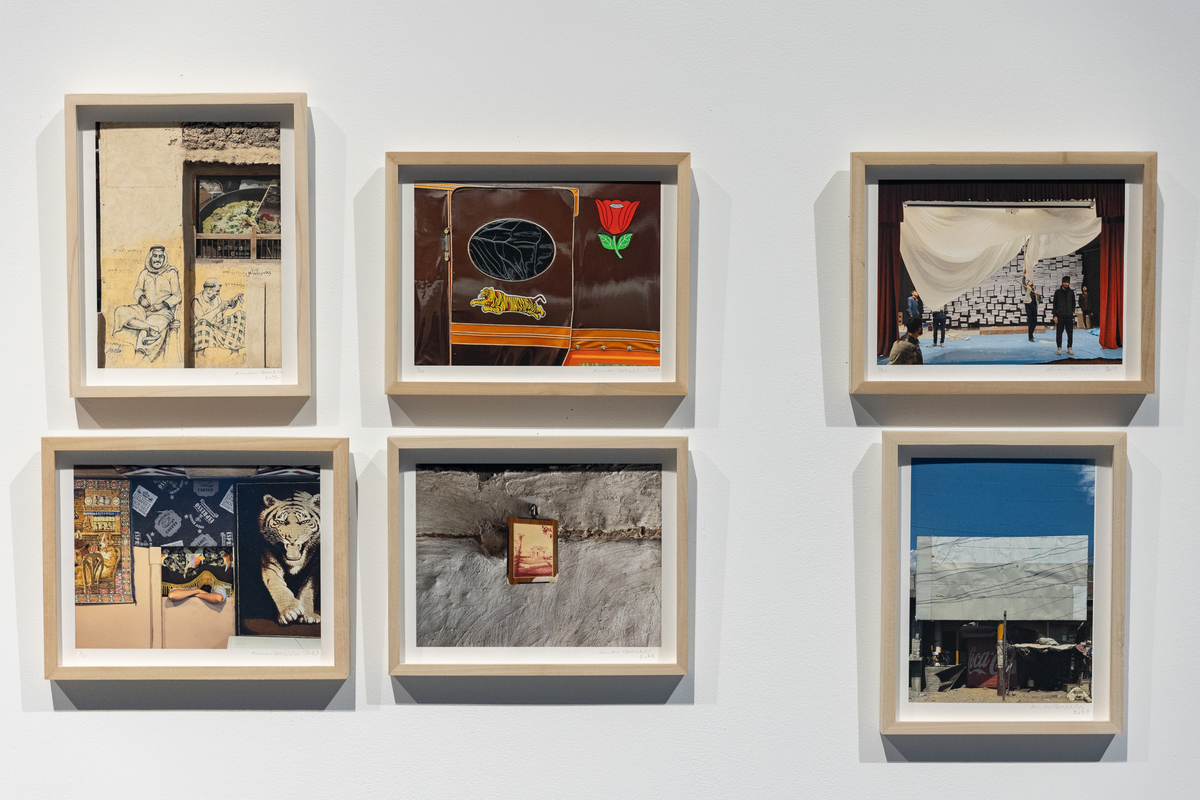
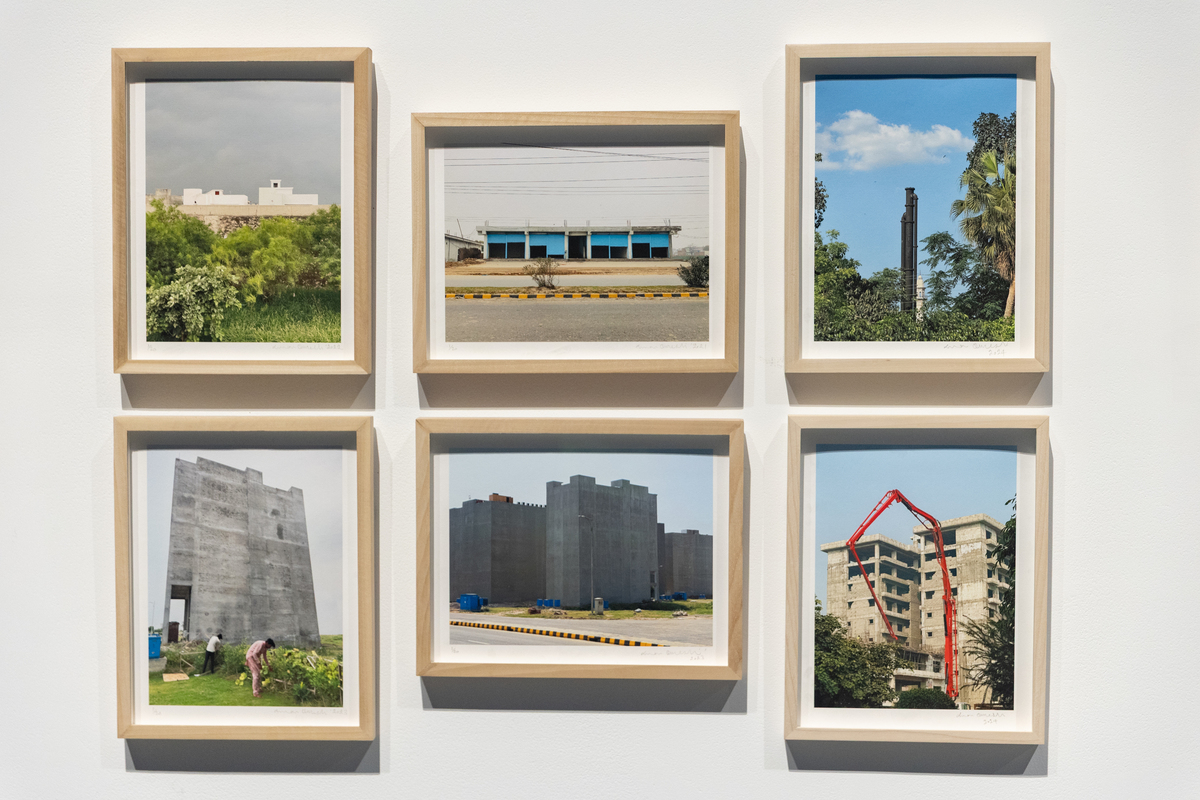
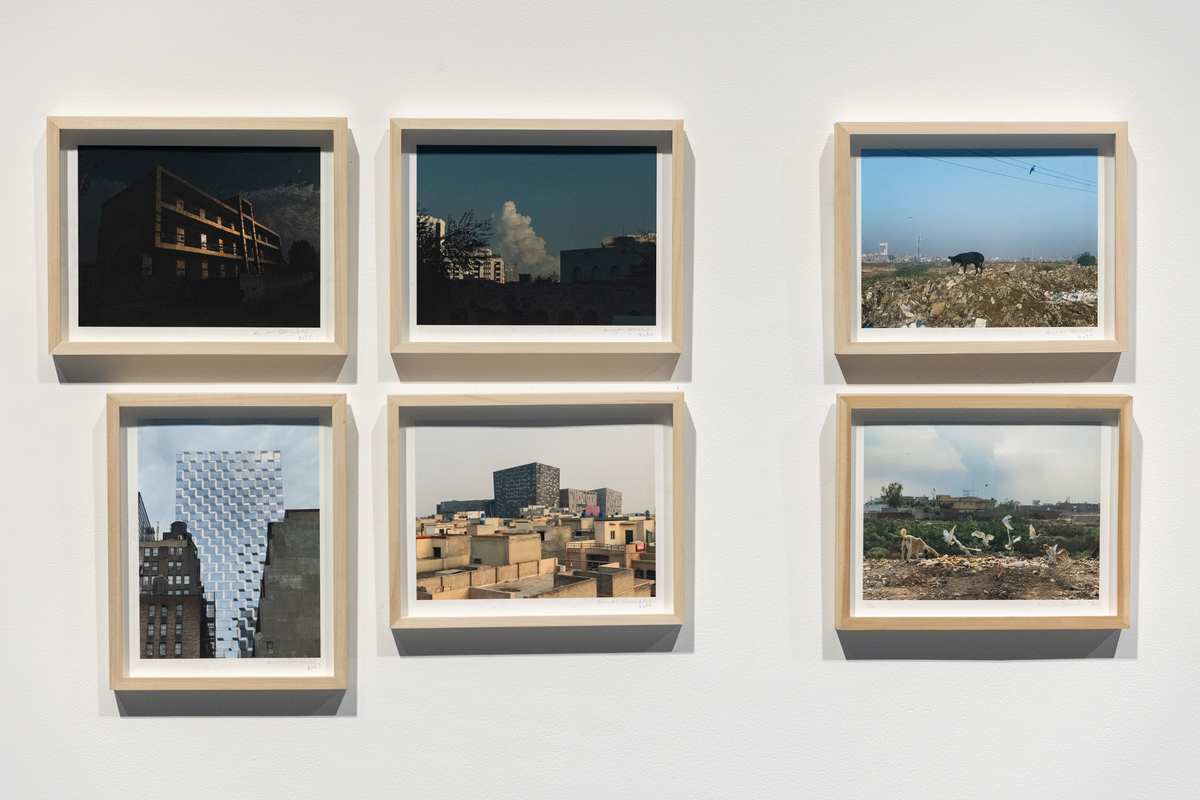
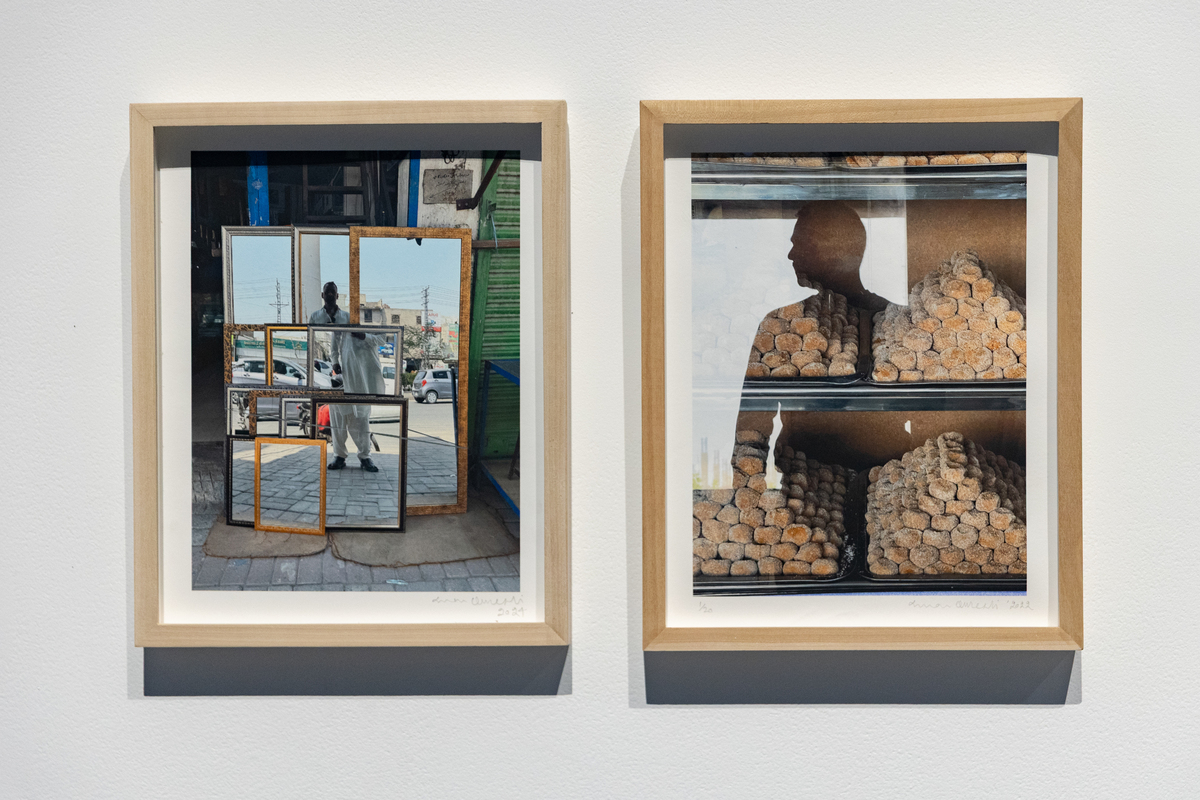
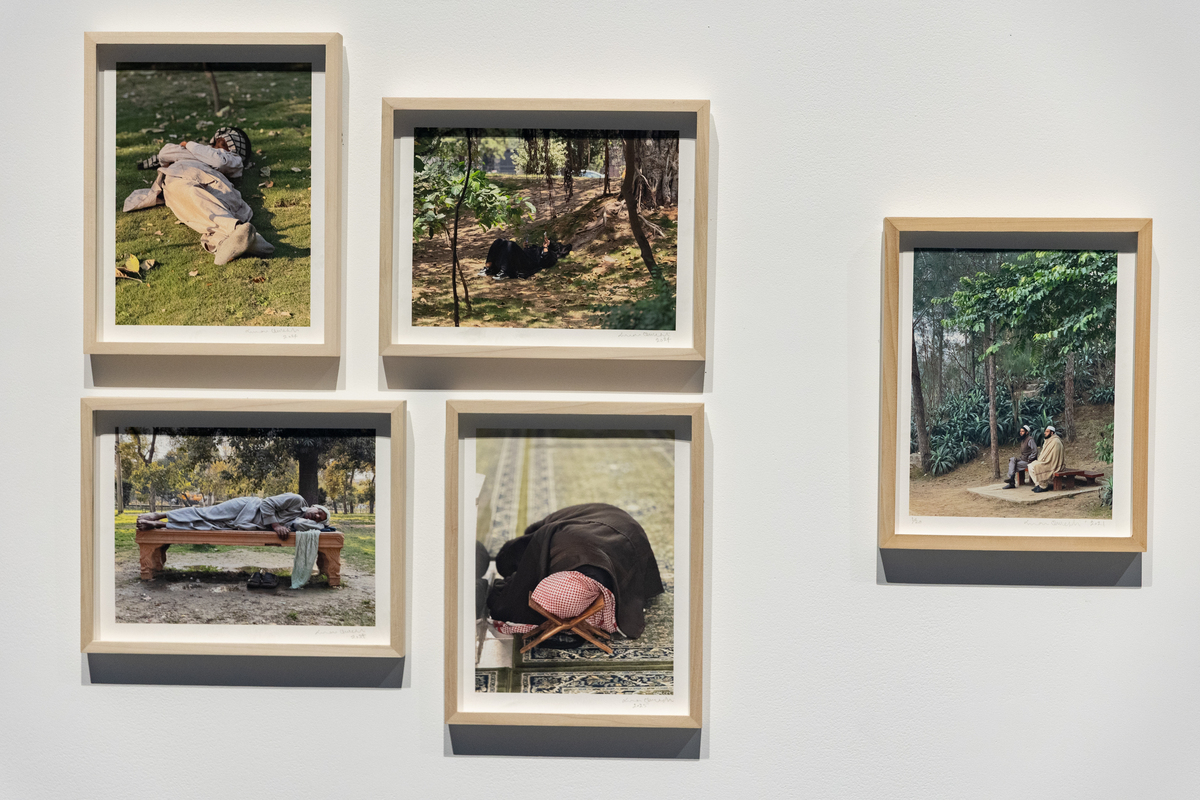
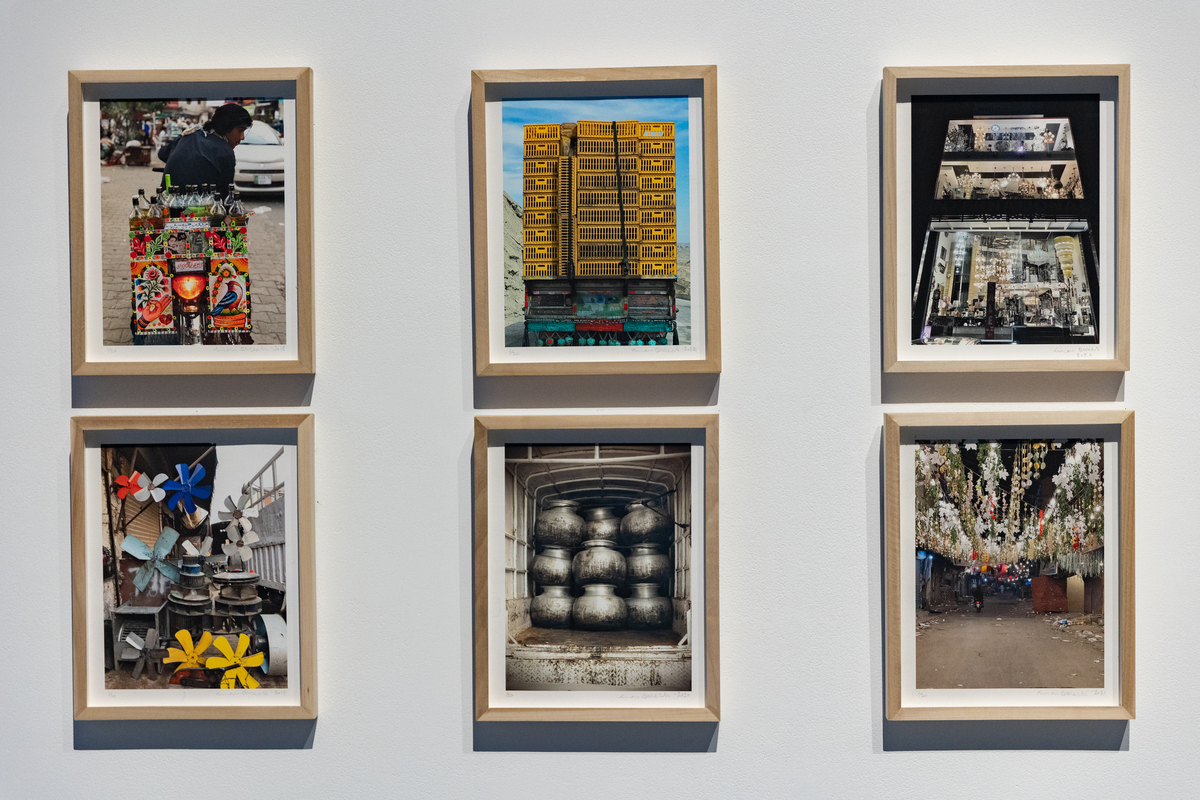
Imran Qureshi beckons us to Lahore – a city he considers his expanded studio – where the post-industrial present thickens the architectural layers of Mughal, Sikh and colonial pasts. In miniature painting, multiple narratives, perspectives and even temporalities coexist within a single picture plane. His trained gaze resists the dominant influence of the Eurocentric single-point perspectival approach; the candid photographs of This Shared Vision, Yours and Mine, expose what catches an eye able to find rectilinear frames, pattern as ground, bodies in thoughtful repose or imperial profile, and the flattened picture plane – even in real life.
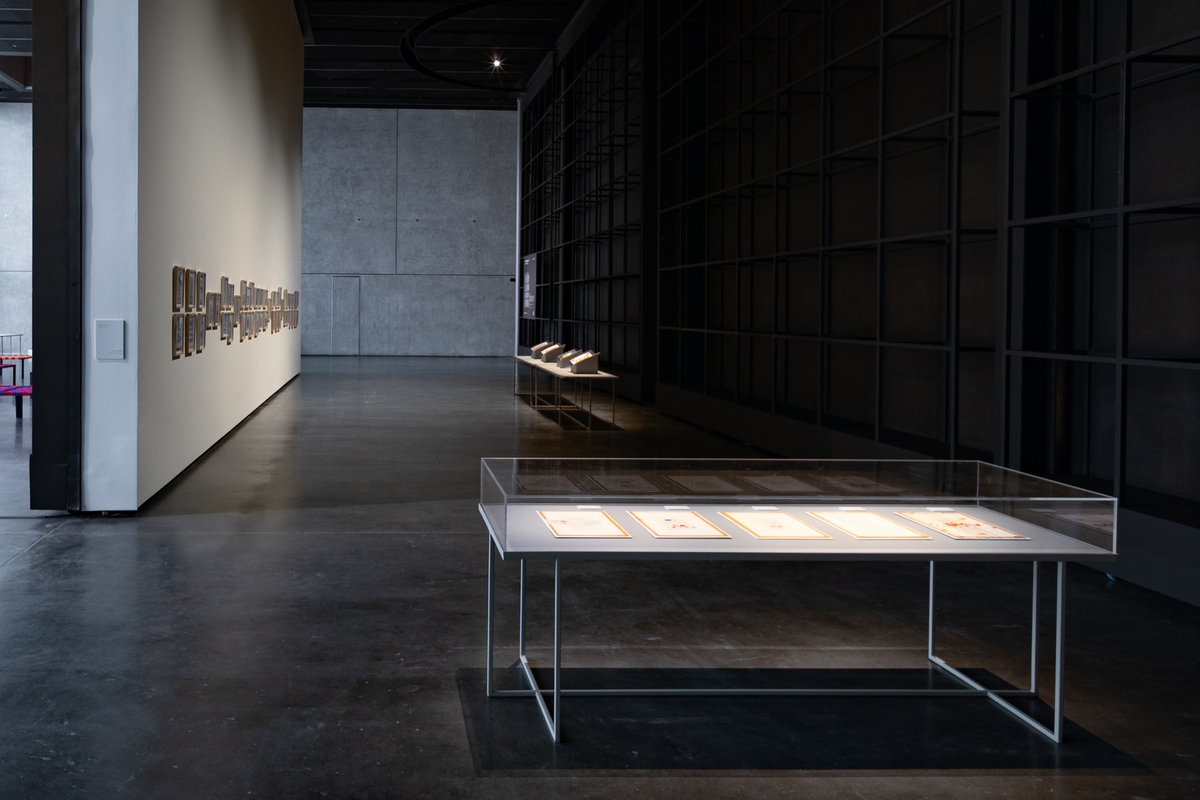
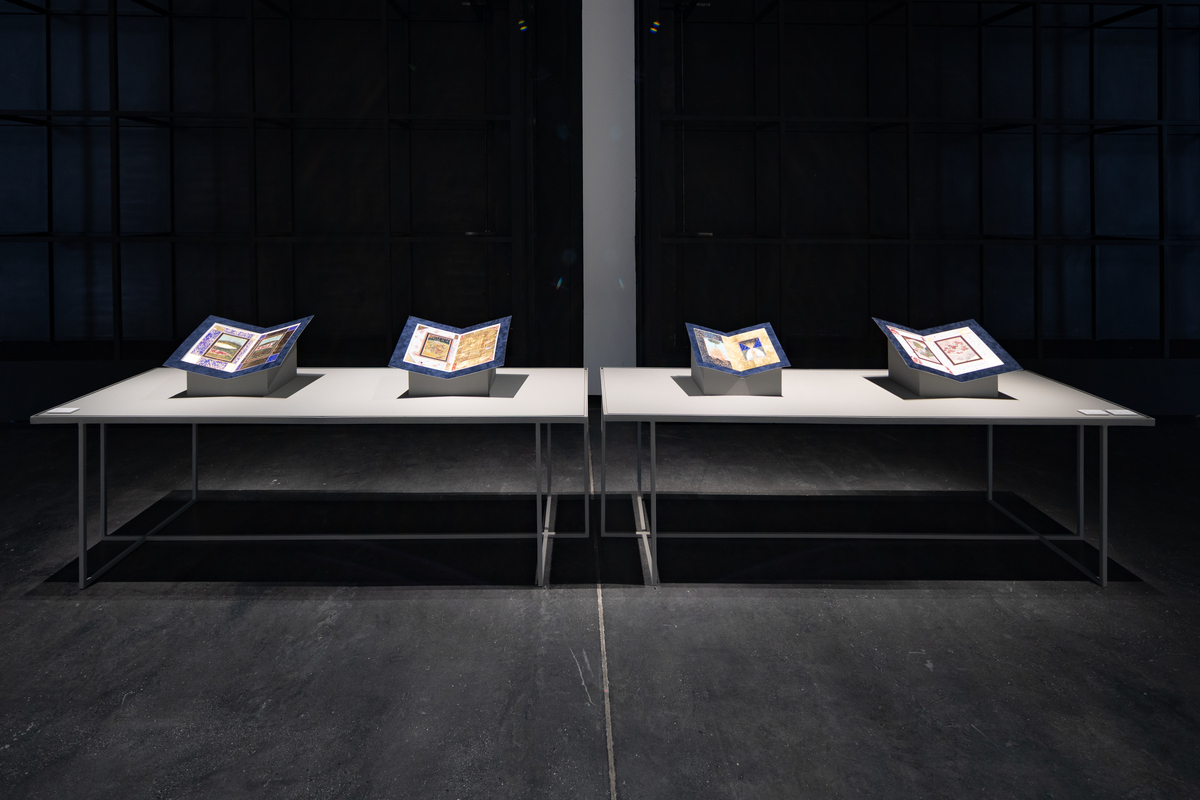
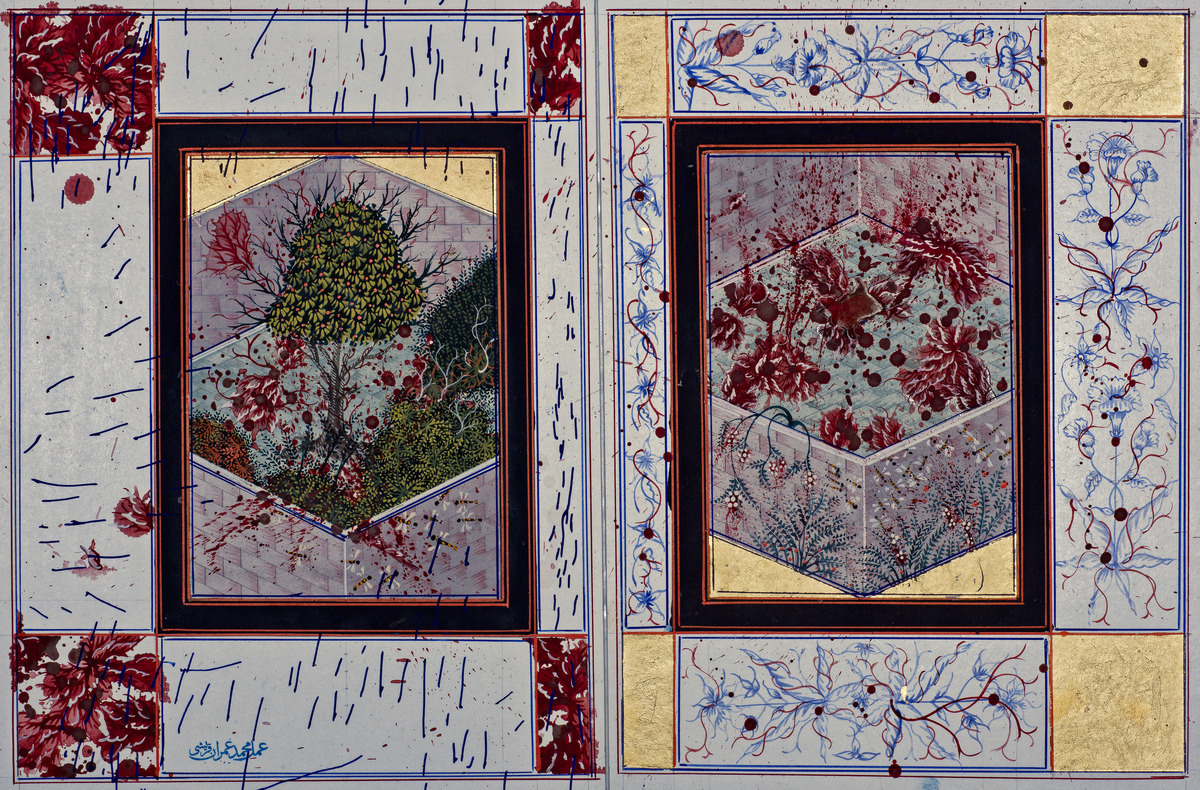
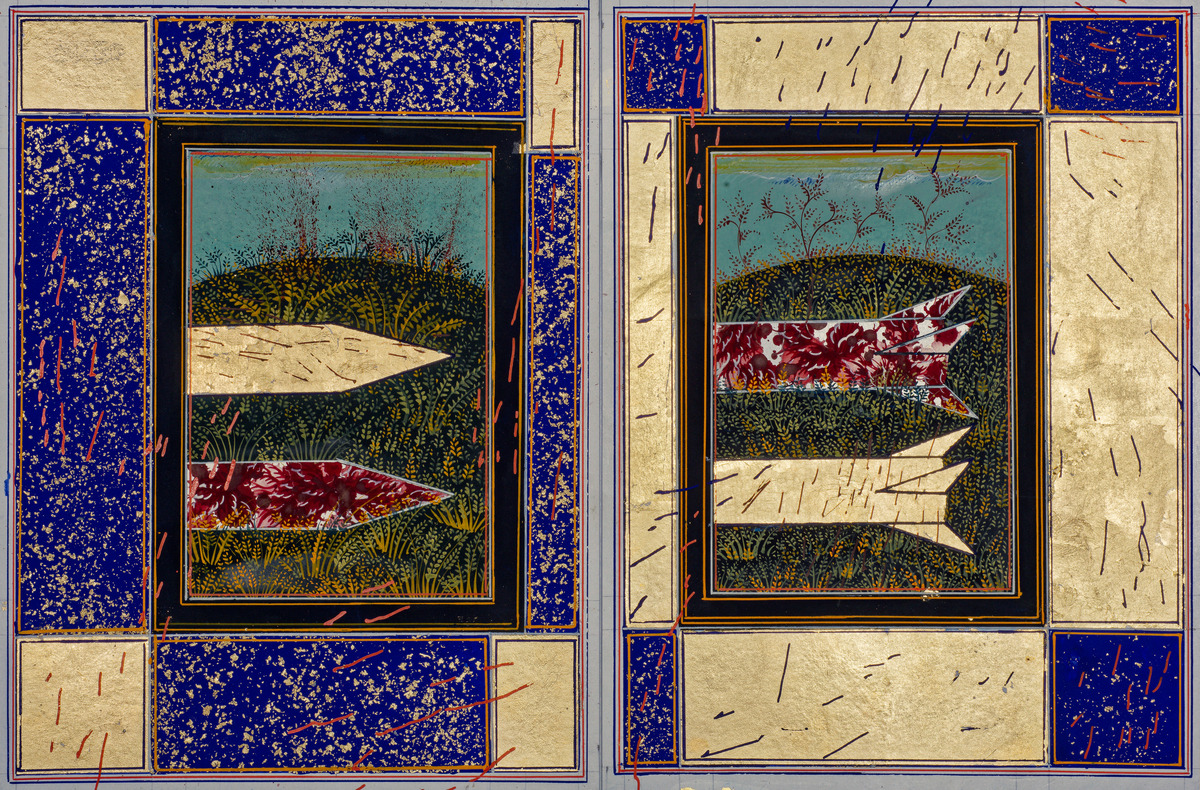
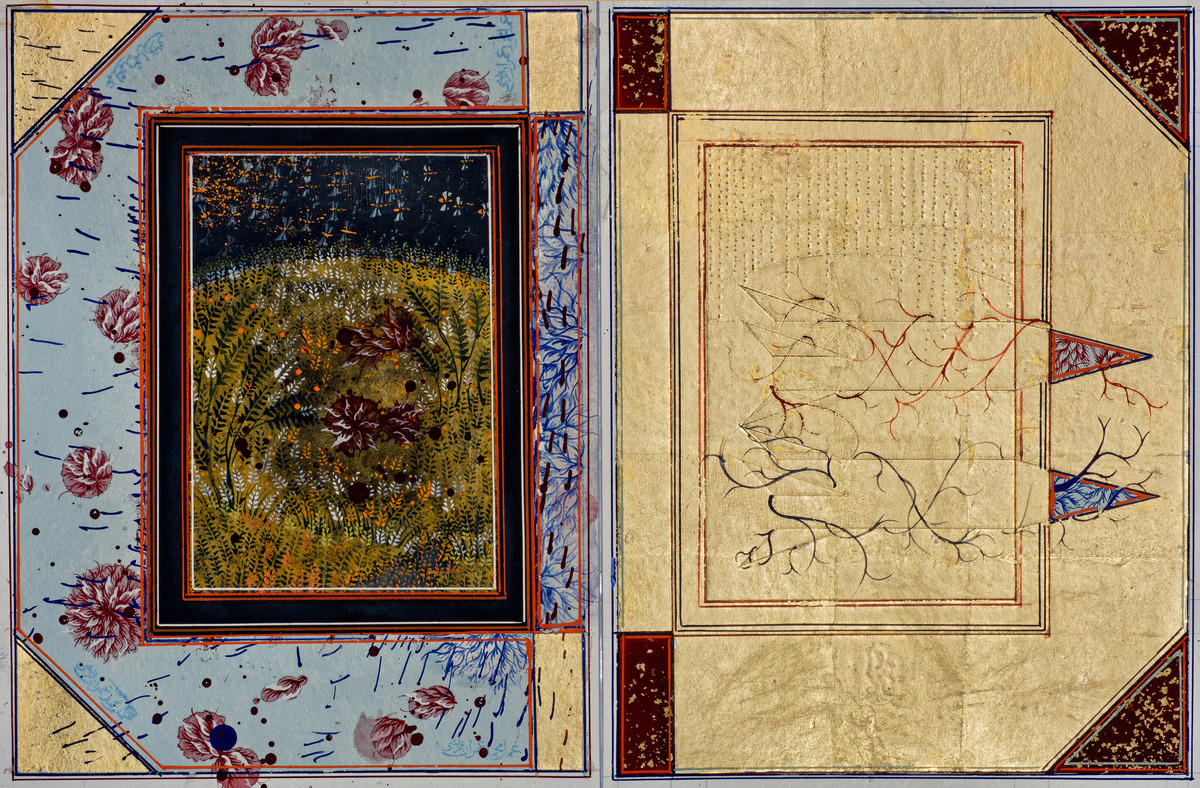
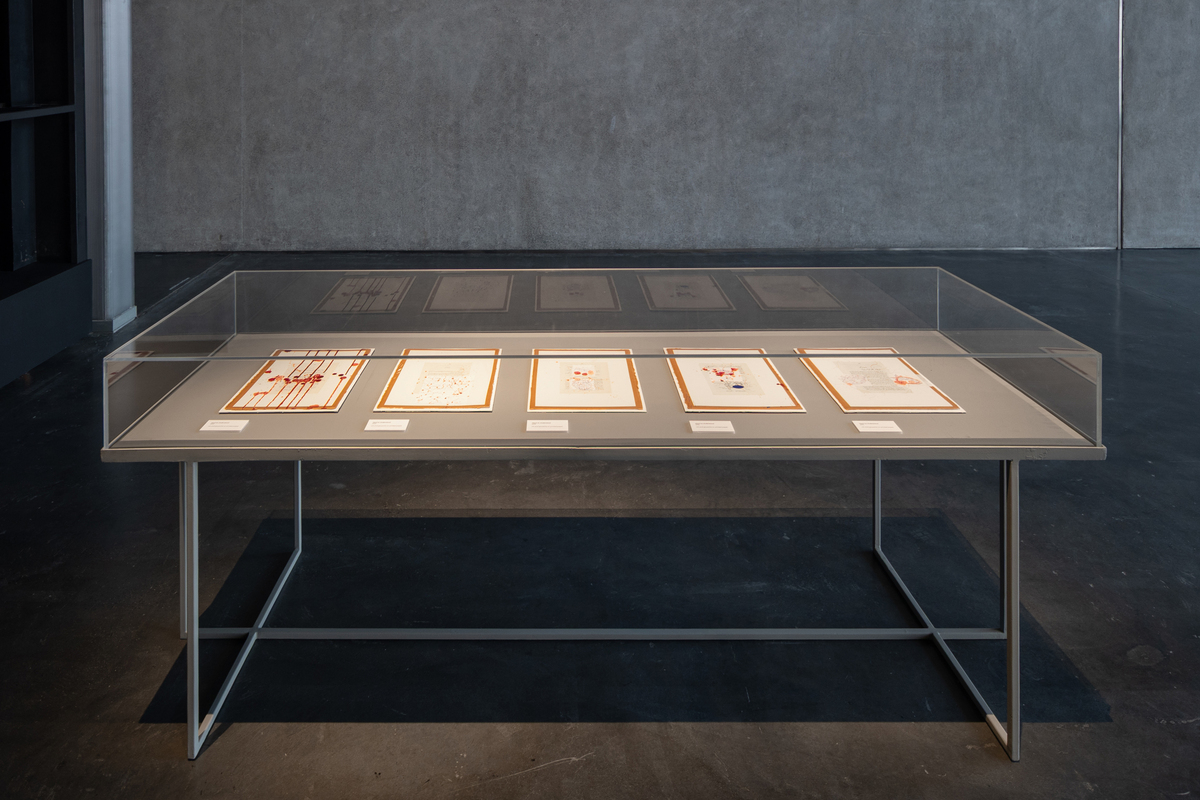
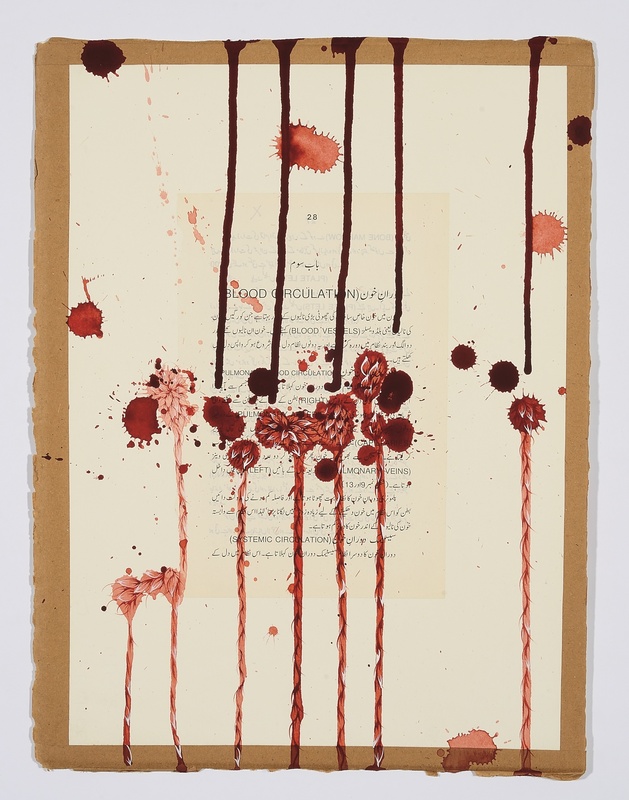
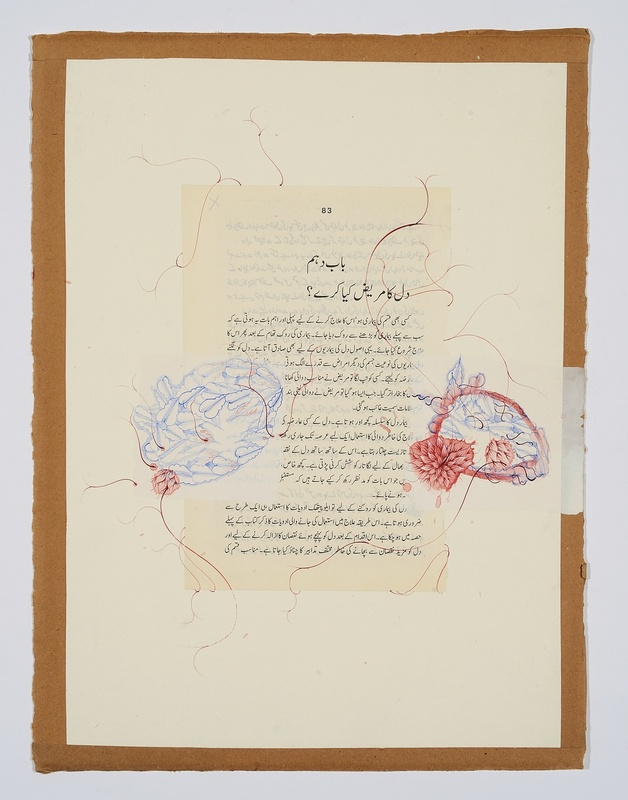
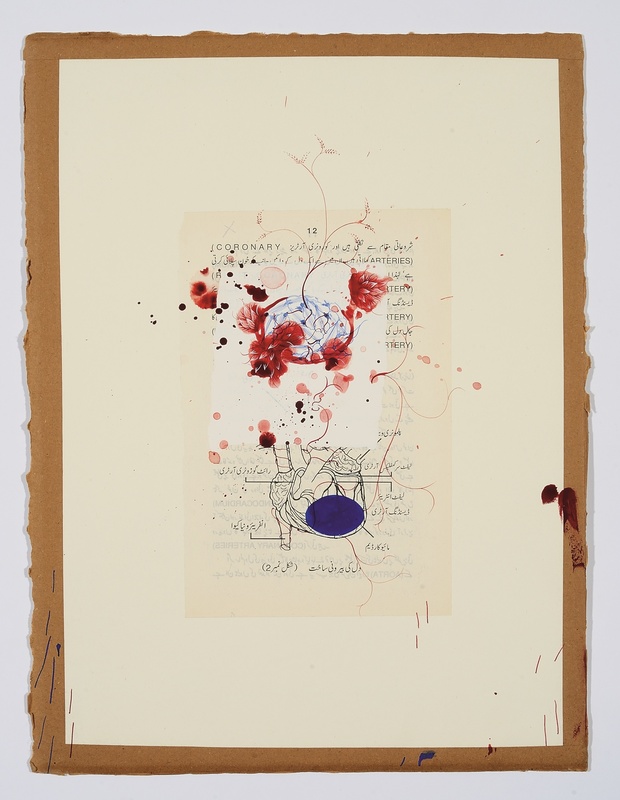
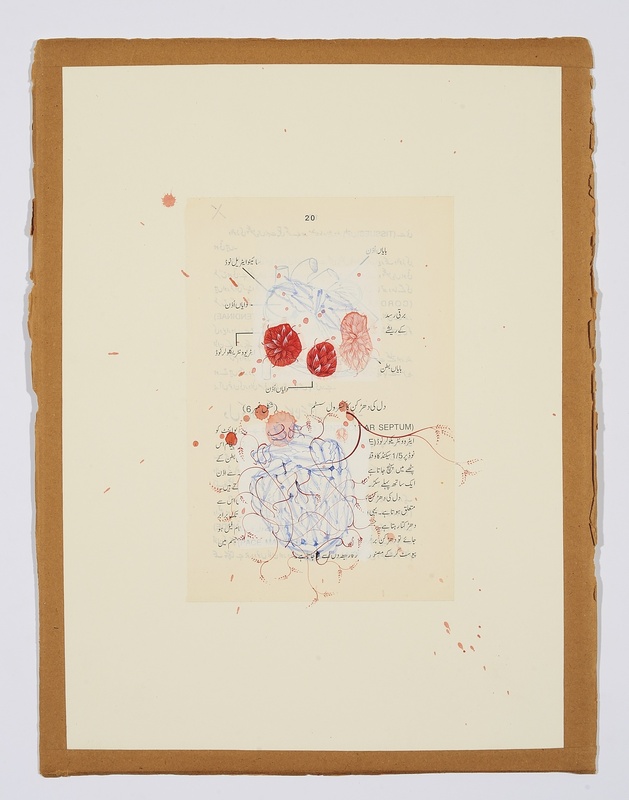
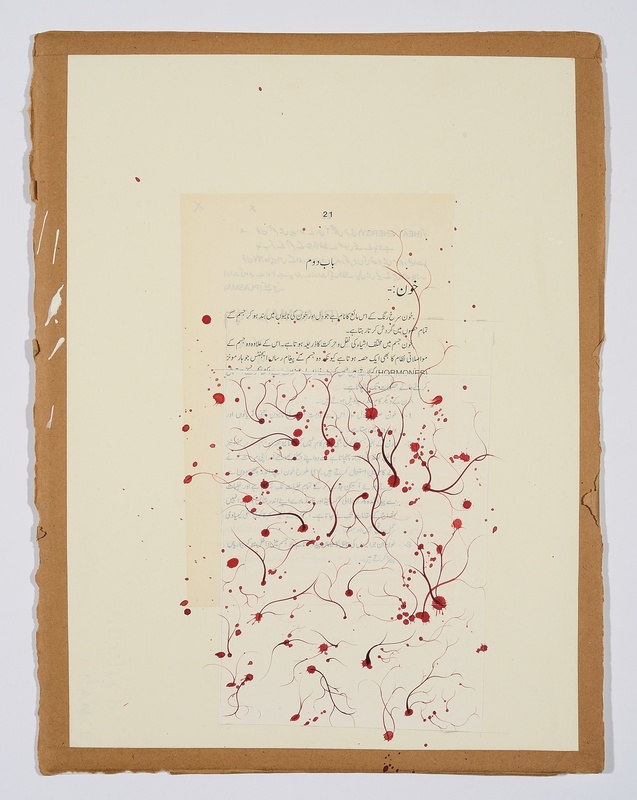
Imran’s iconic miniature paintings appear within vitrines, echoing the manner in which precious manuscripts are displayed. The gilded missile is a seductive yet lethal object, sometimes central, sometimes concealed, red and blue pigment seeping through the world as finely rendered foliage struggles to resist, resolutely contesting destruction with beauty. He layers in found book pages printed in Urdu, taken from popular literature with the sort of storytelling that may once have been illustrated by an artist.
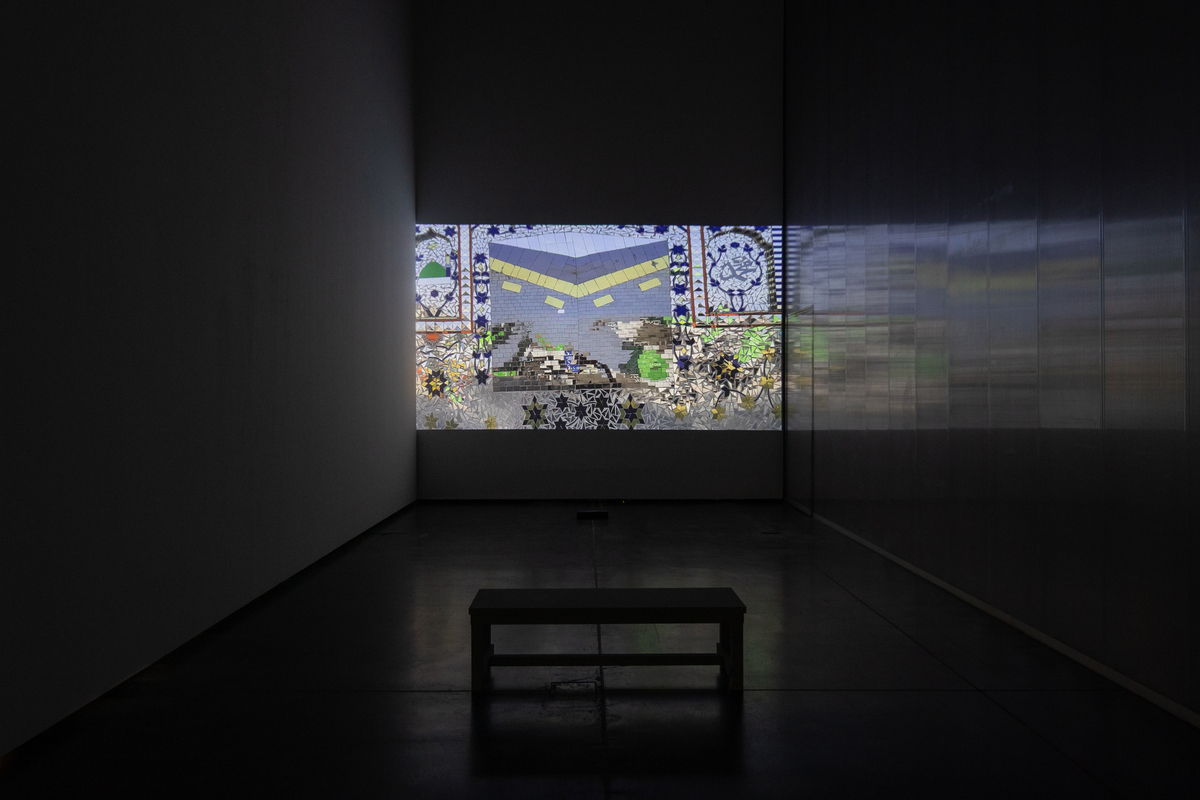
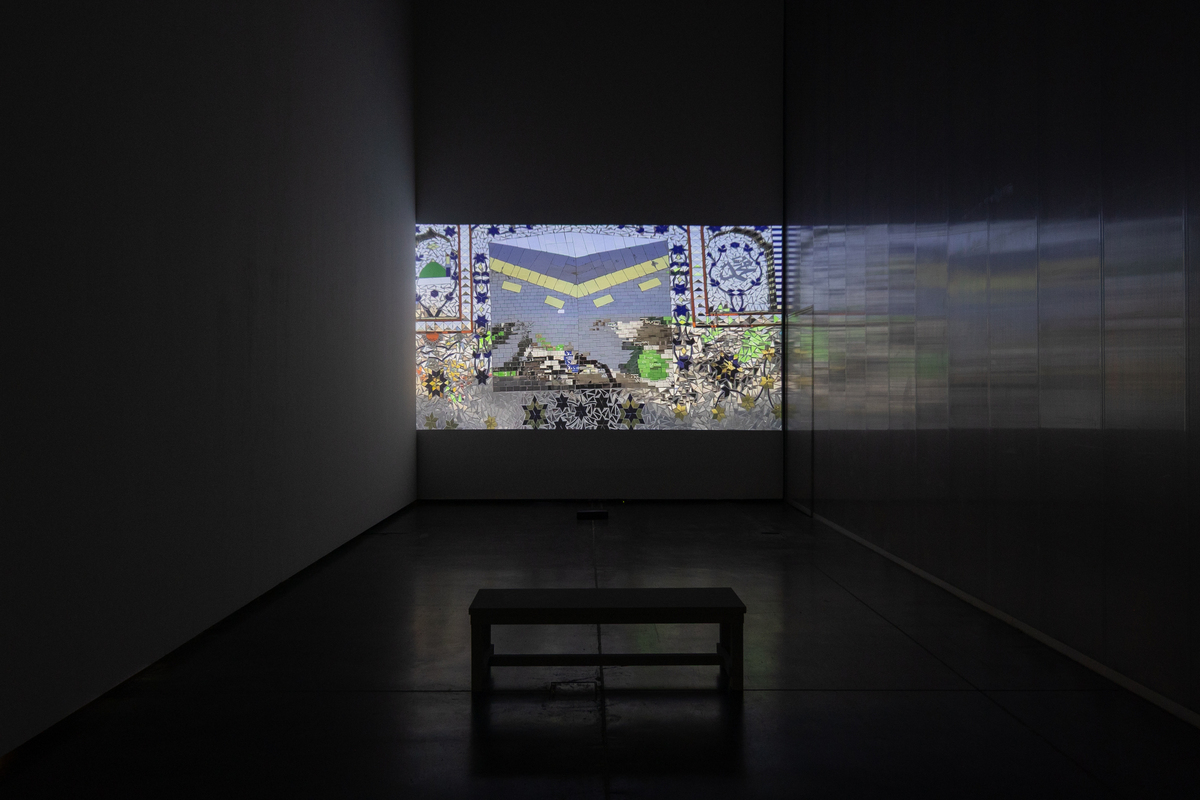
Still/Moving captures a mirror mosaic rendition of the Kaaba – rendered in a humble and less refined form of the elaborate mirror work associated with the decorative elements of the Mughal or Rajput palace – now increasingly popular within local mosques and shrines in Sindh and Punjab. Clearly encountered on the street, the reflective surface of the mosaic refracts the movement of traffic and passers-by as if they might be circumambulating the sacred square. The video Deen o Duniya (Faith and World), shown in a mirrored room, amplifies the LED lights that are used to celebrate the birth of the Prophet Muhammad (PBUH) presenting a kaleidoscopic, even transcendental world, designed to allow the viewer to lose their bearings.
Installation Views