

New Delhi
Reena Saini Kallat
Porous Passages Reena Saini Kallat
Reena Saini Kallat’s third solo show at Nature Morte, New Delhi, brings together a body of works incorporating diverse media such as drawing, photography, sculpture, video and text-based installations created over the last eight years. The exhibition reveals the artist’s ongoing commitment to exposing the fluidity of contested boundaries to reflect upon the deep-rooted histories of civilizations, alongside a more quietly poetic pursuit of the ephemeral through fragile materials.
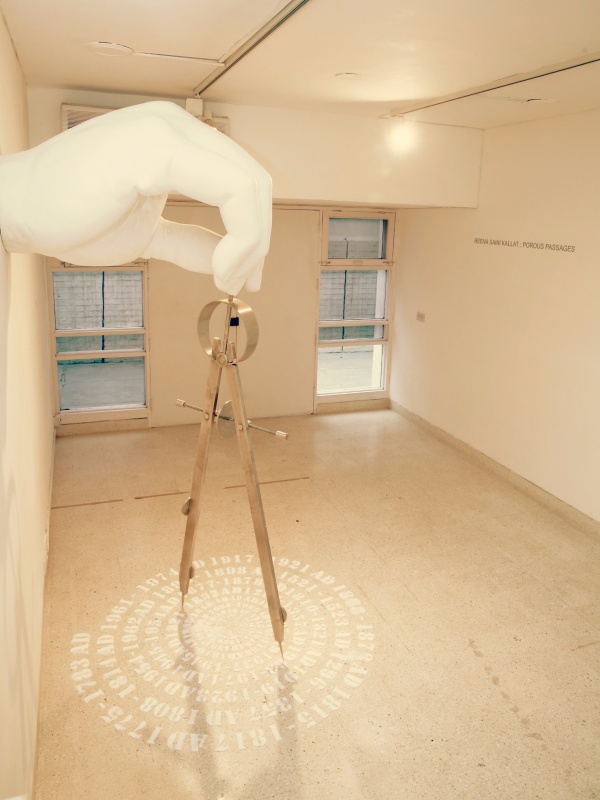
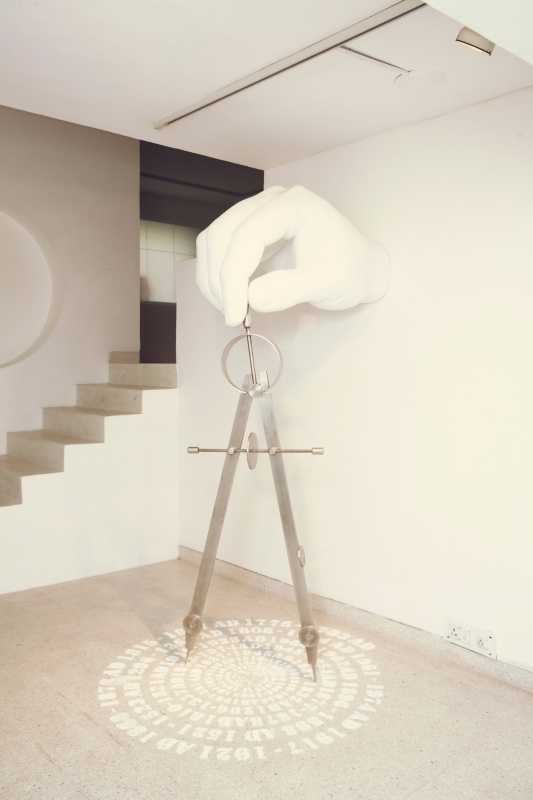
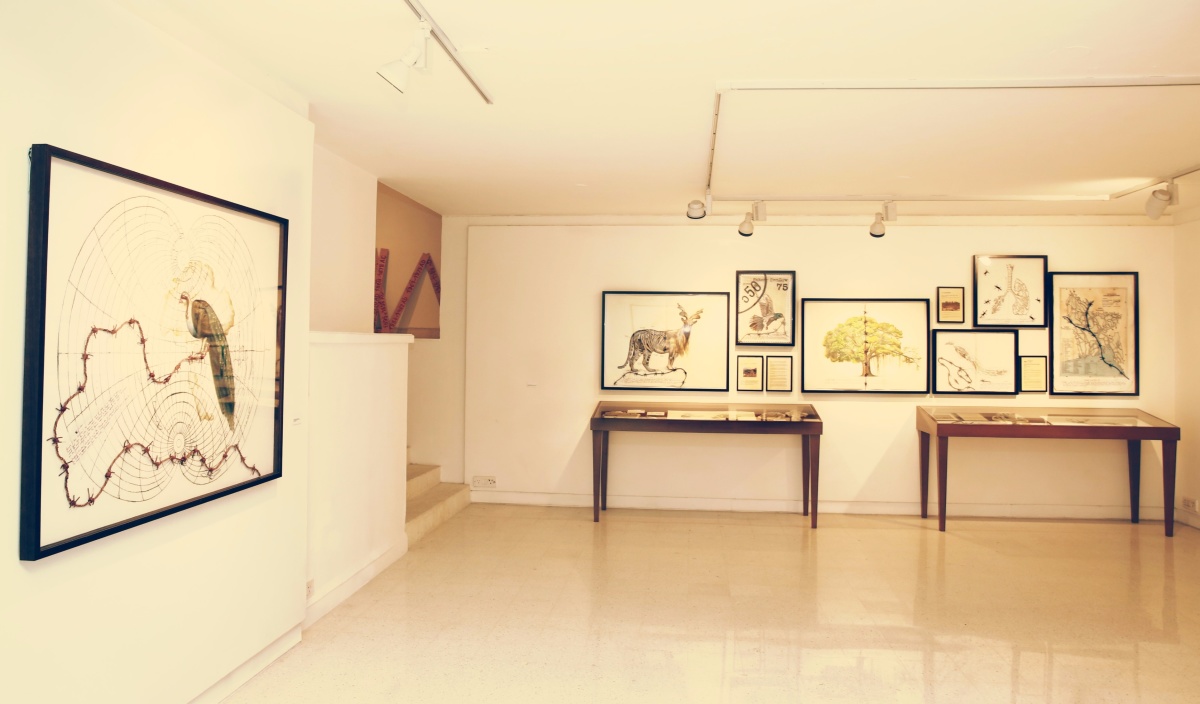
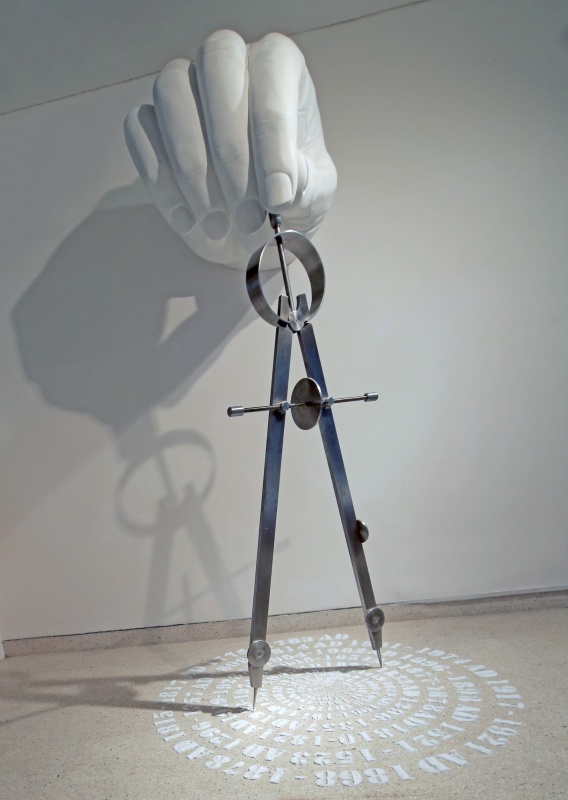
In Measurement from Evaporating Oceans (2013), the concentric, numerical rings announce dates that mark the commencement and closure of what are ironically called ‘Independence wars’ fought in various corners of the world. Rendered through the frailty of a text composed in salt, the hand and the instrument seem to make a futile attempt at quantifying history.
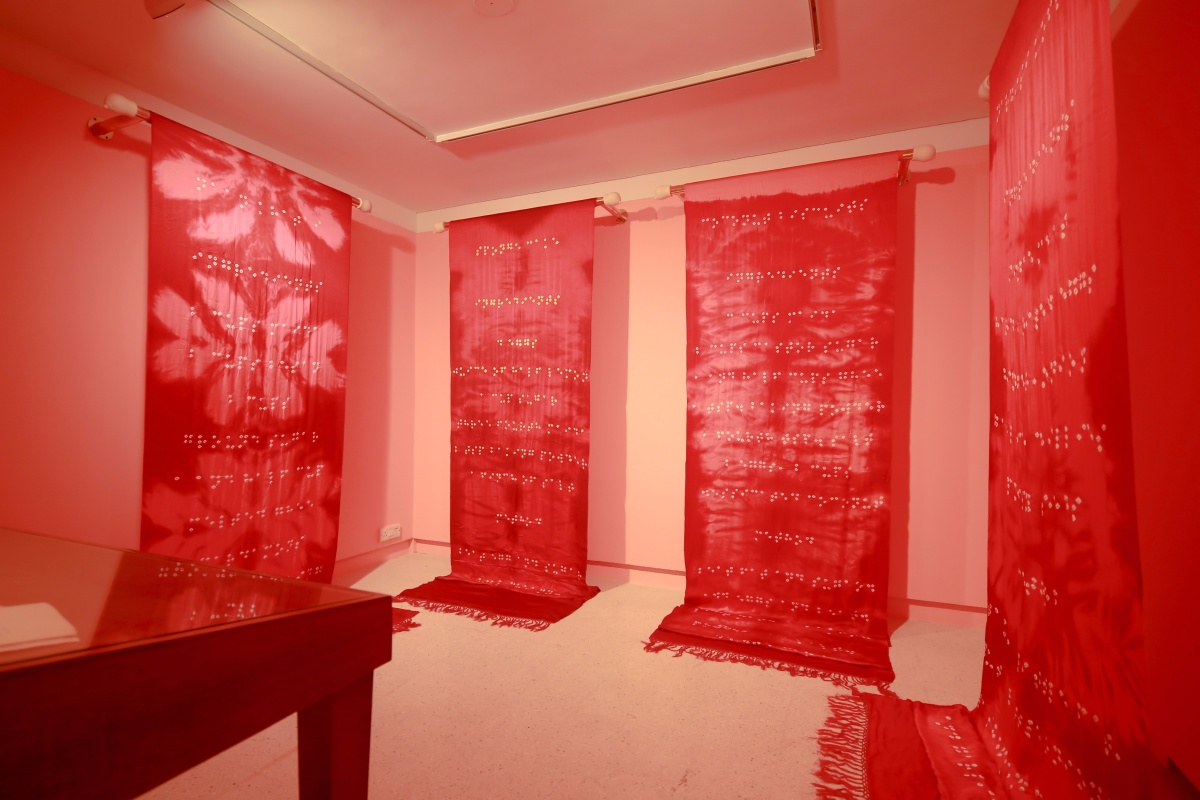
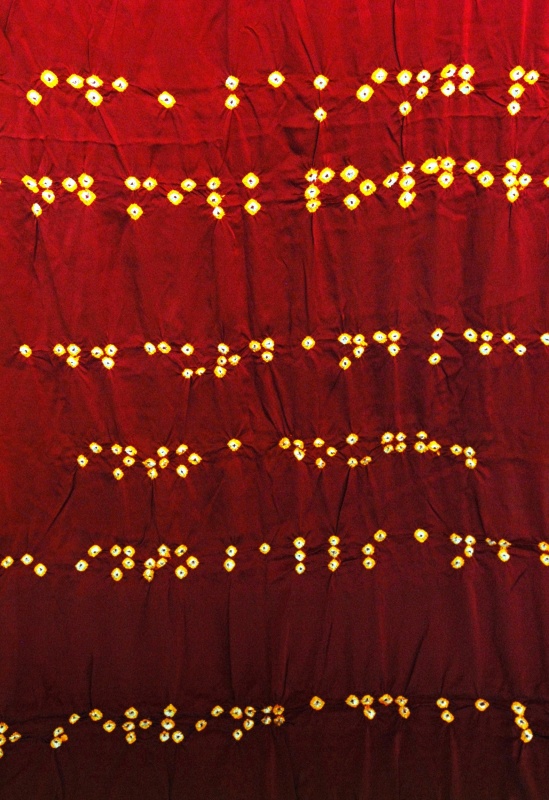
Walls of the Womb (2007), Reena’s poetic ode to her mother who passed away when she was just eight years old has been built around the objects she left behind; fabric she once sewed, photo albums, personal books, and stories about her that were narrated to the artist by relatives, besides her own faint recollections. The work comprises four scrolls dyed in shades of red such that through the process of tie and dye, the un-dyed dotted areas remain white, and the untreated virgin fabric forms a text in Braille that are essentially recipes from her mother’s handwritten cookbooks. “The dotted patterns forming the script in braille disallow easy access to the content of the text, much like the relationship with my mother that is built on fragments of inscrutable memory,” says Reena.
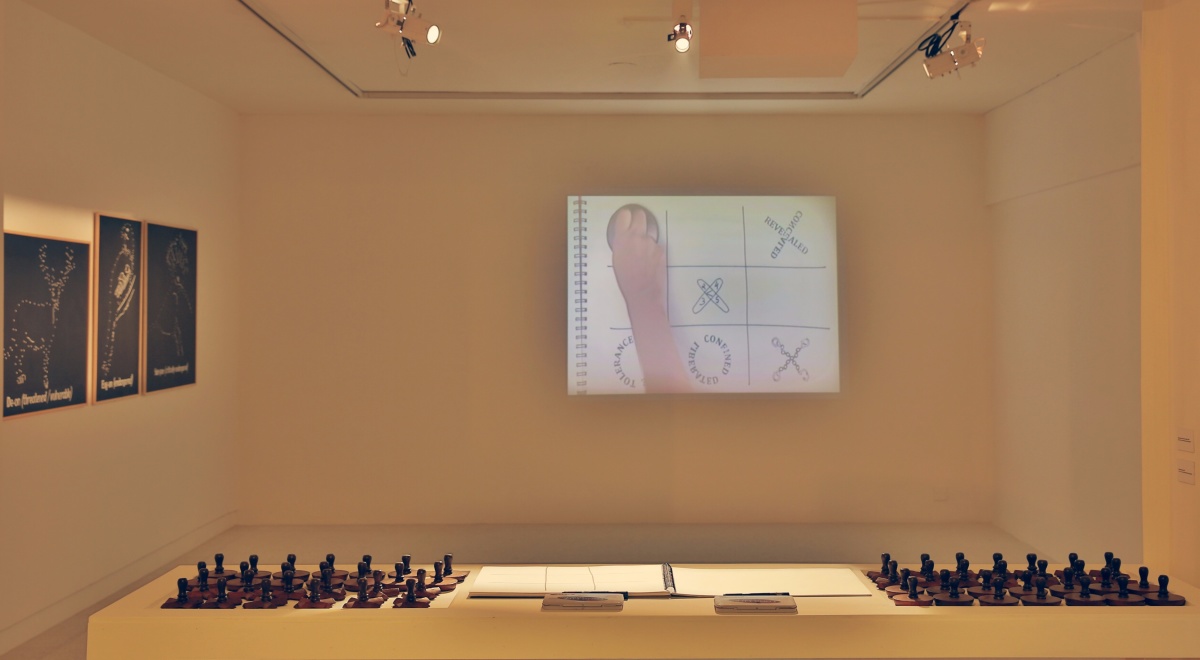
Set within the game of Noughts and Crosses (X & O), meant to be played between two players who take turns, marking the spaces in a 3x3 grid, the video, Pause Persist (2015) is played by a single player sending and receiving words in a feedback loop forming random thought patterns. A single self separates, both as contestant and companion, with each move propelling dualities, contradictions and ambiguities.
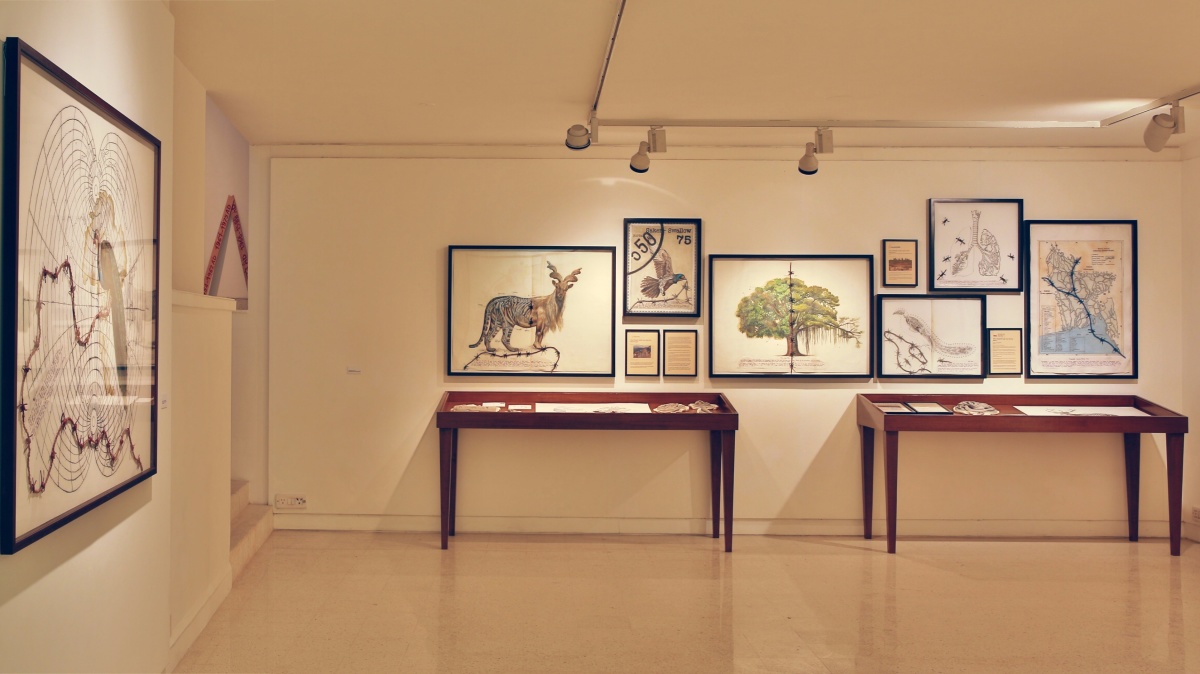
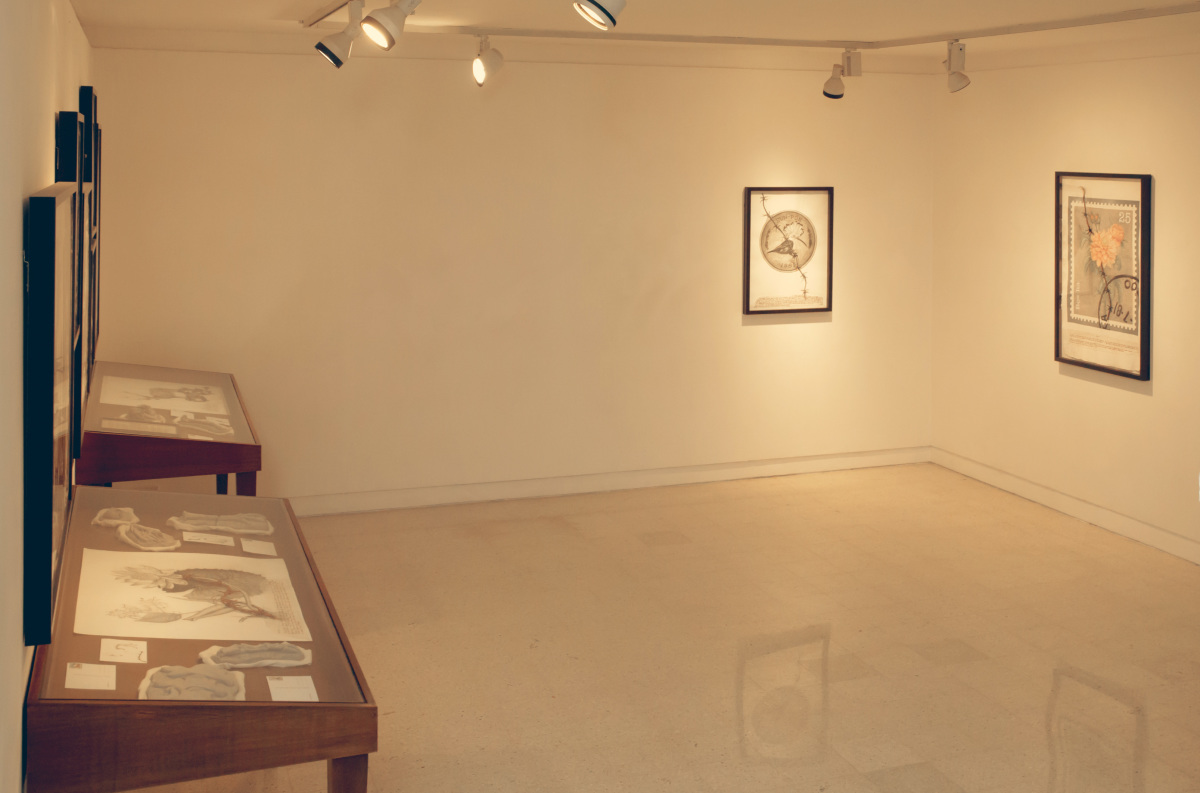
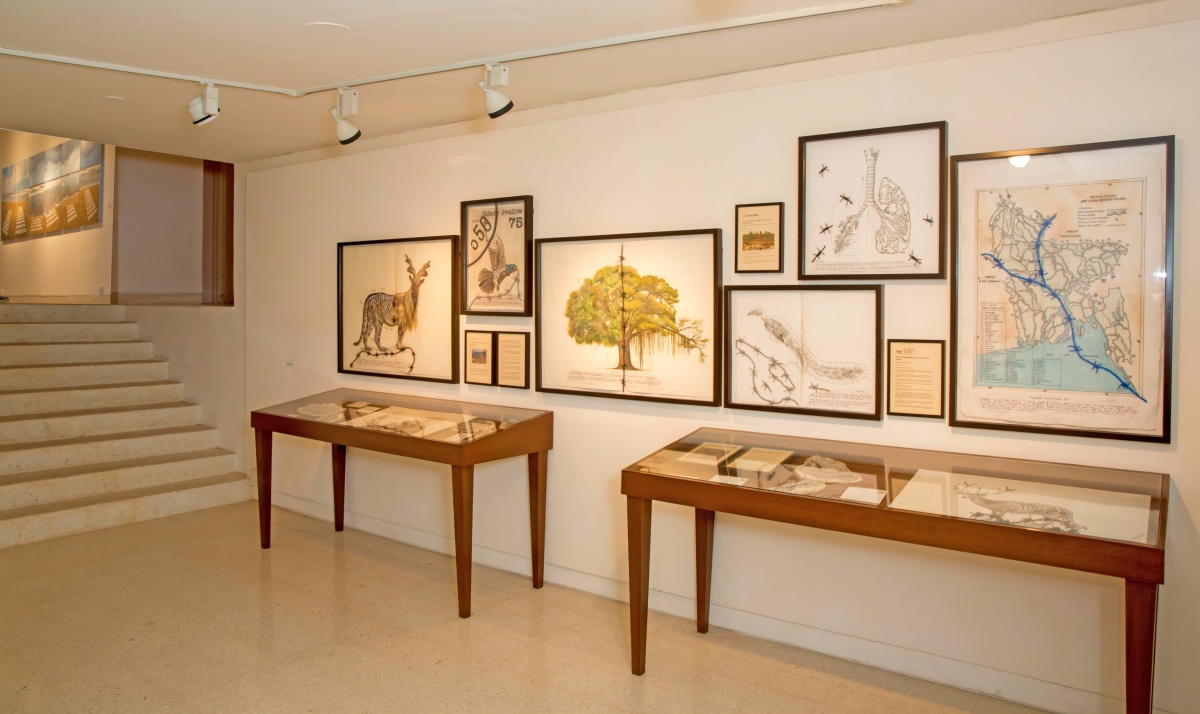
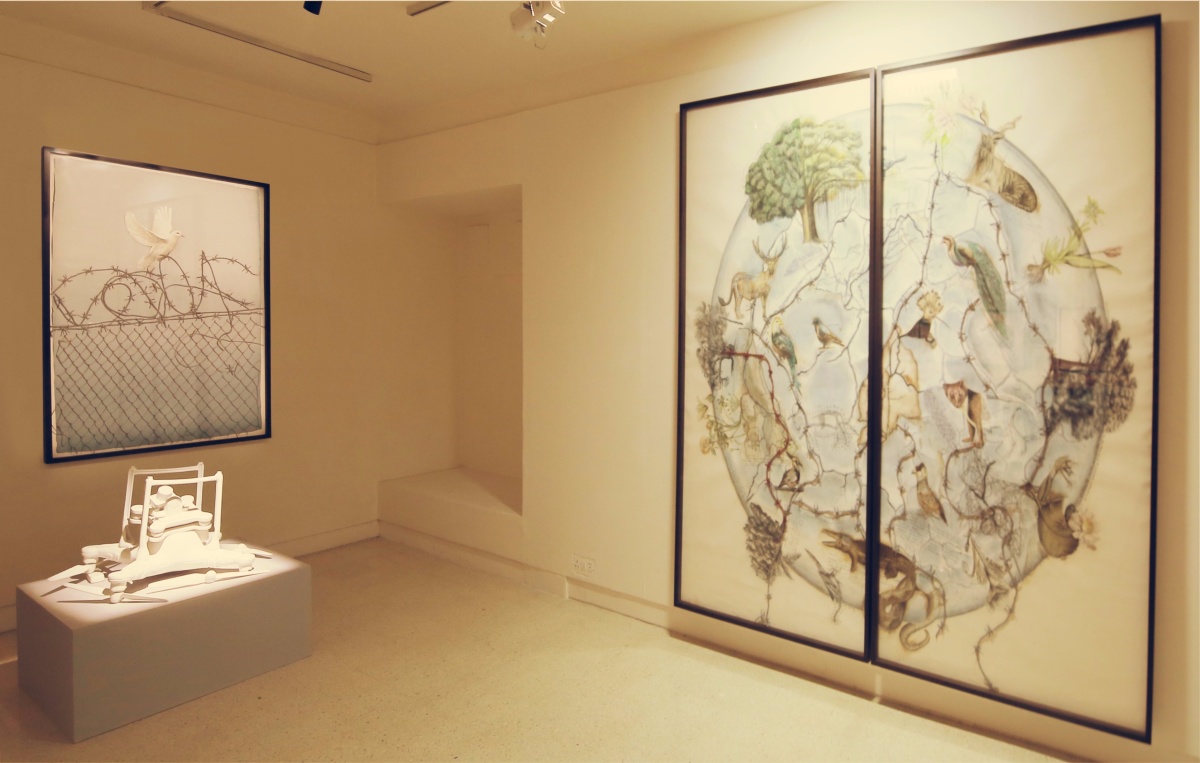
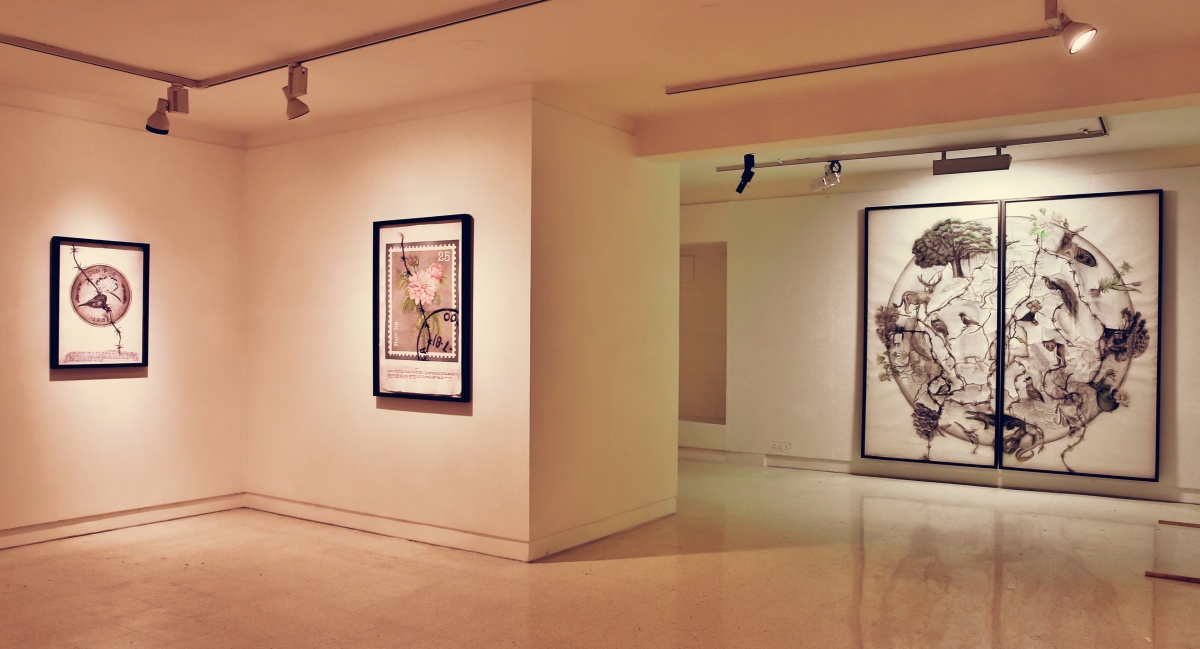
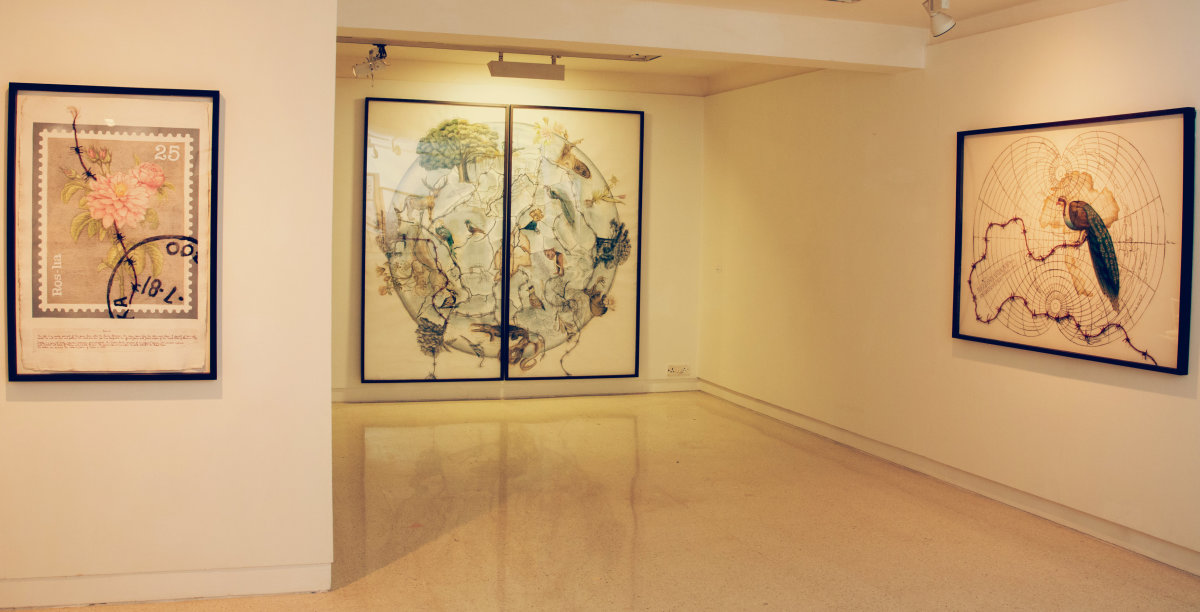
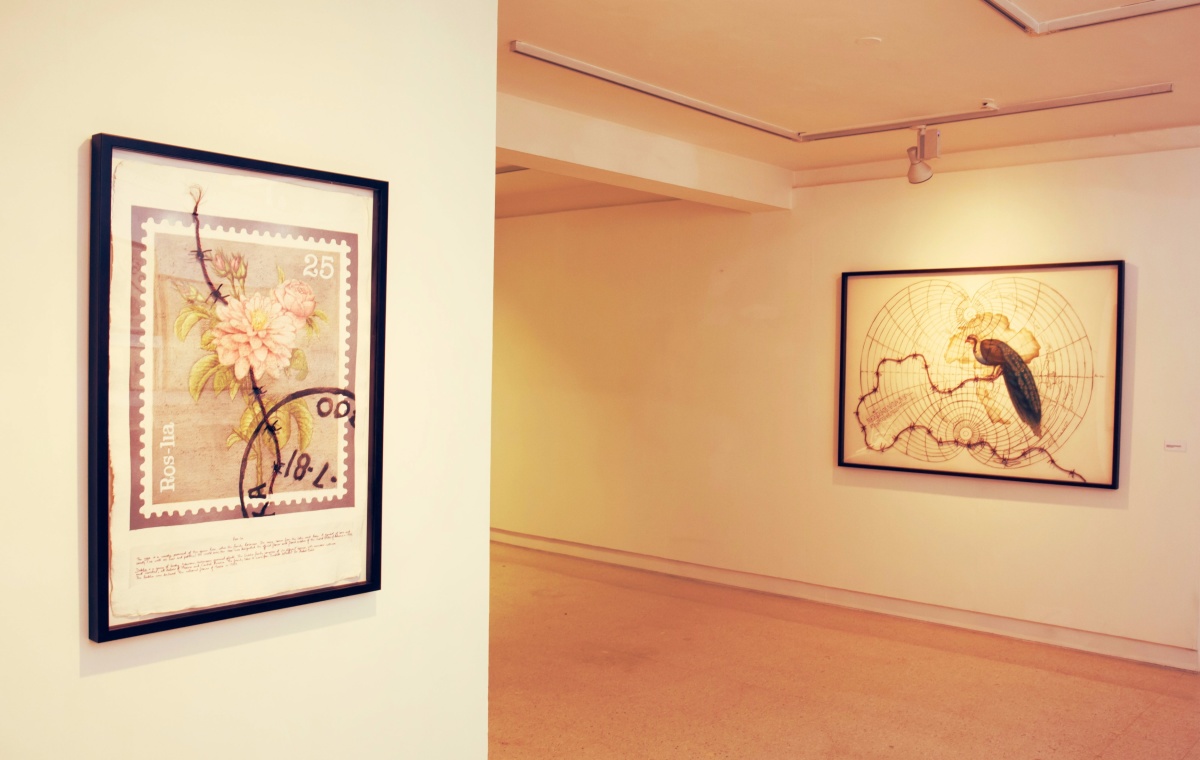
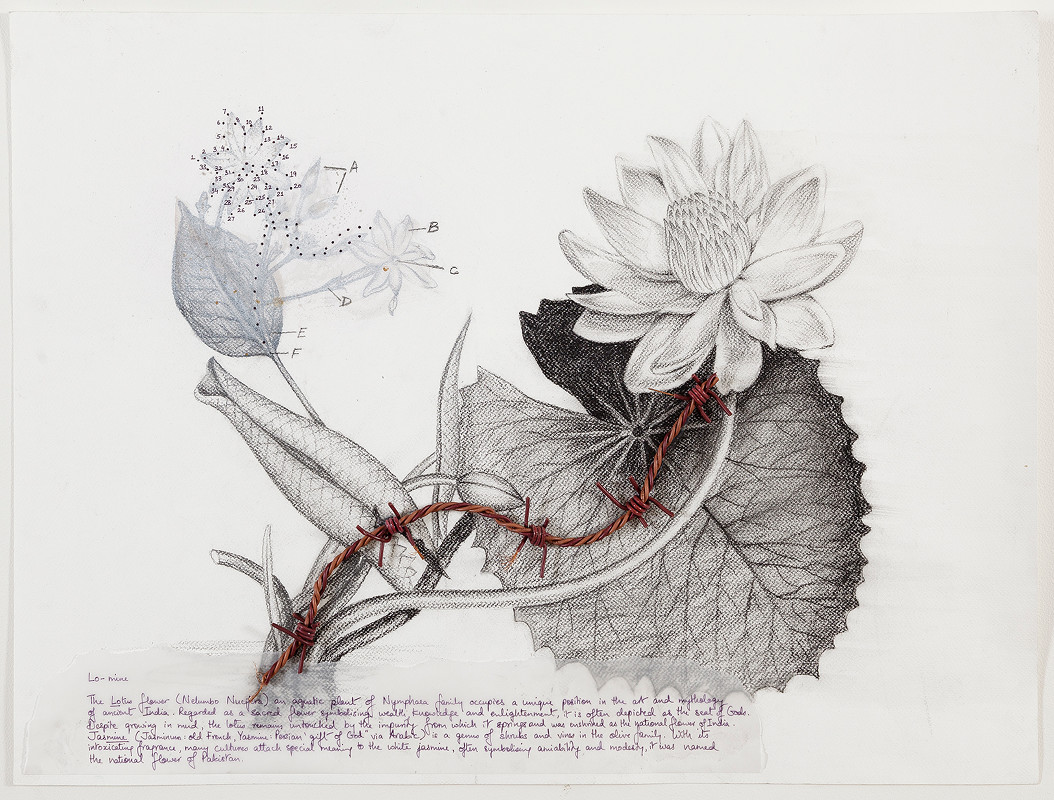
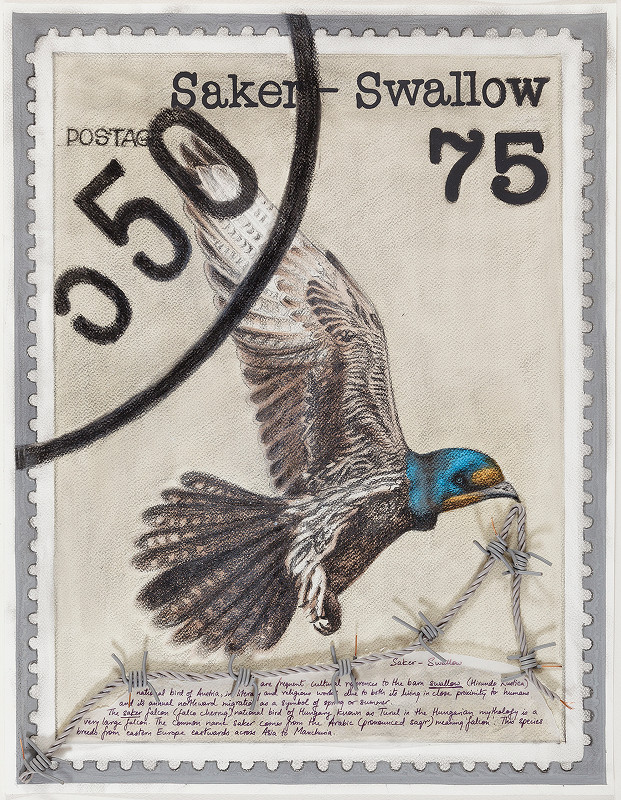
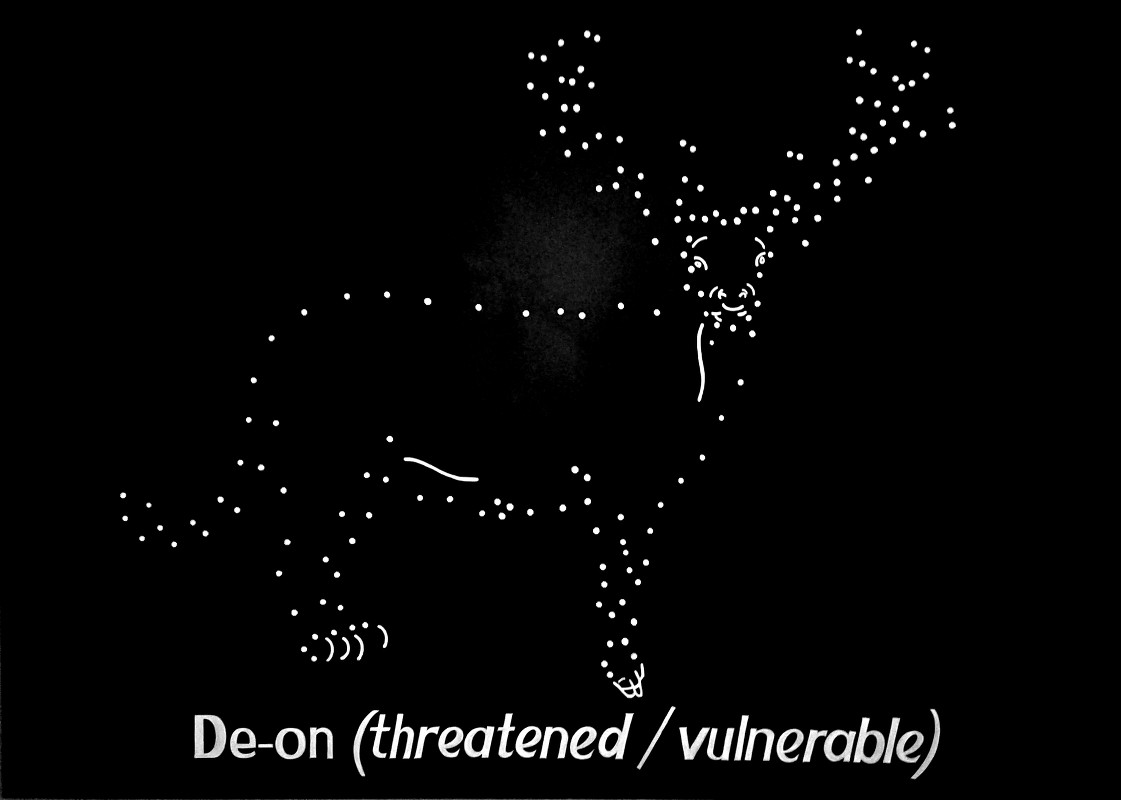
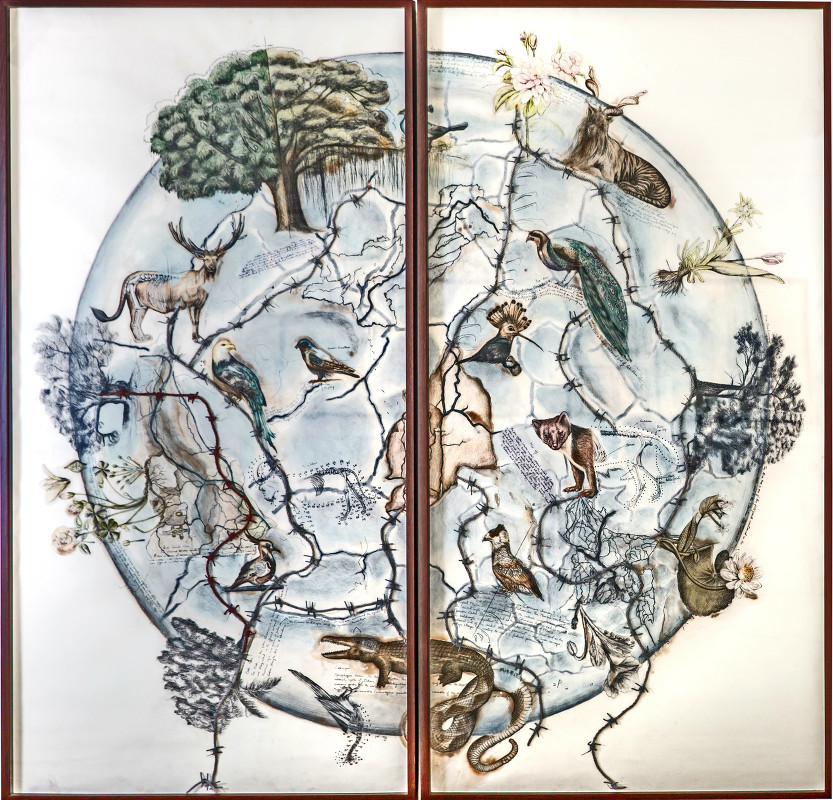
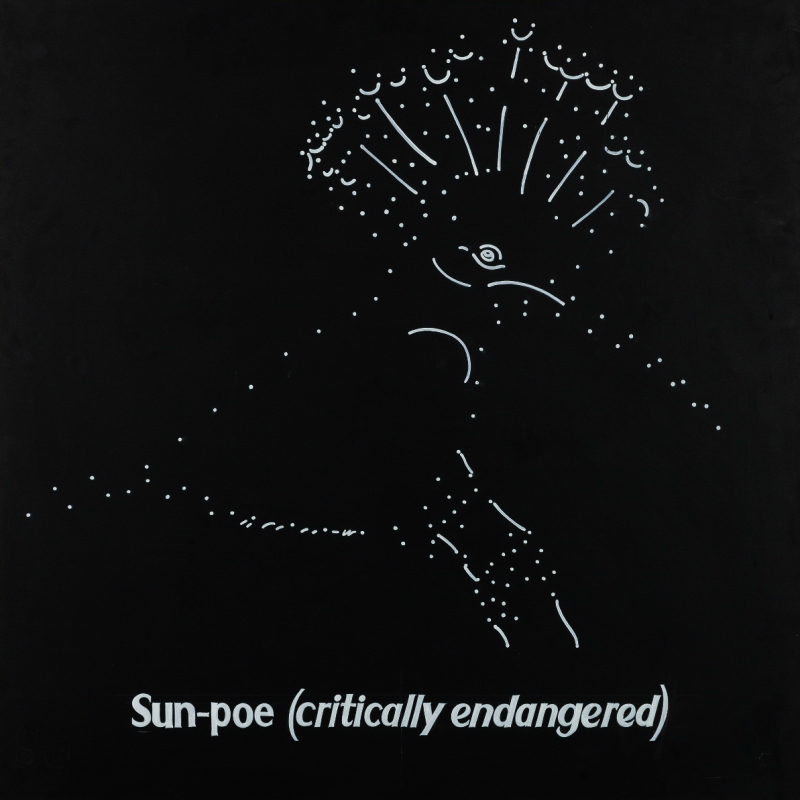
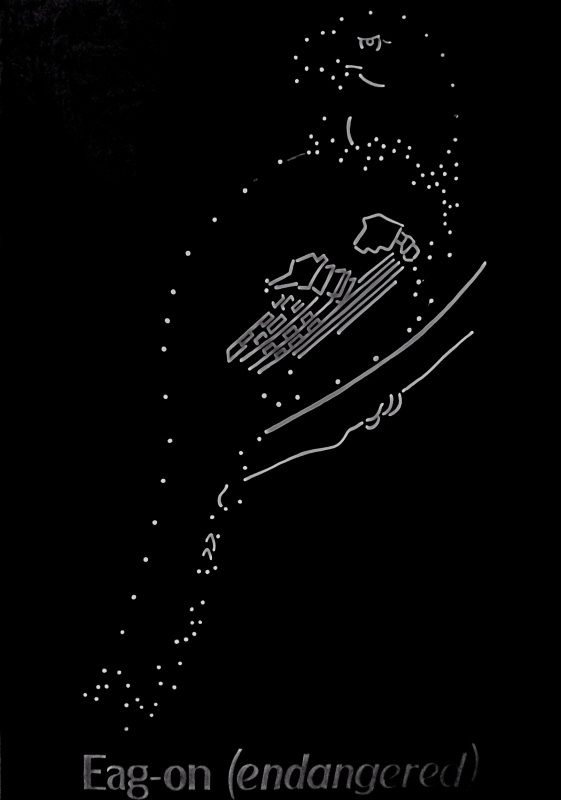
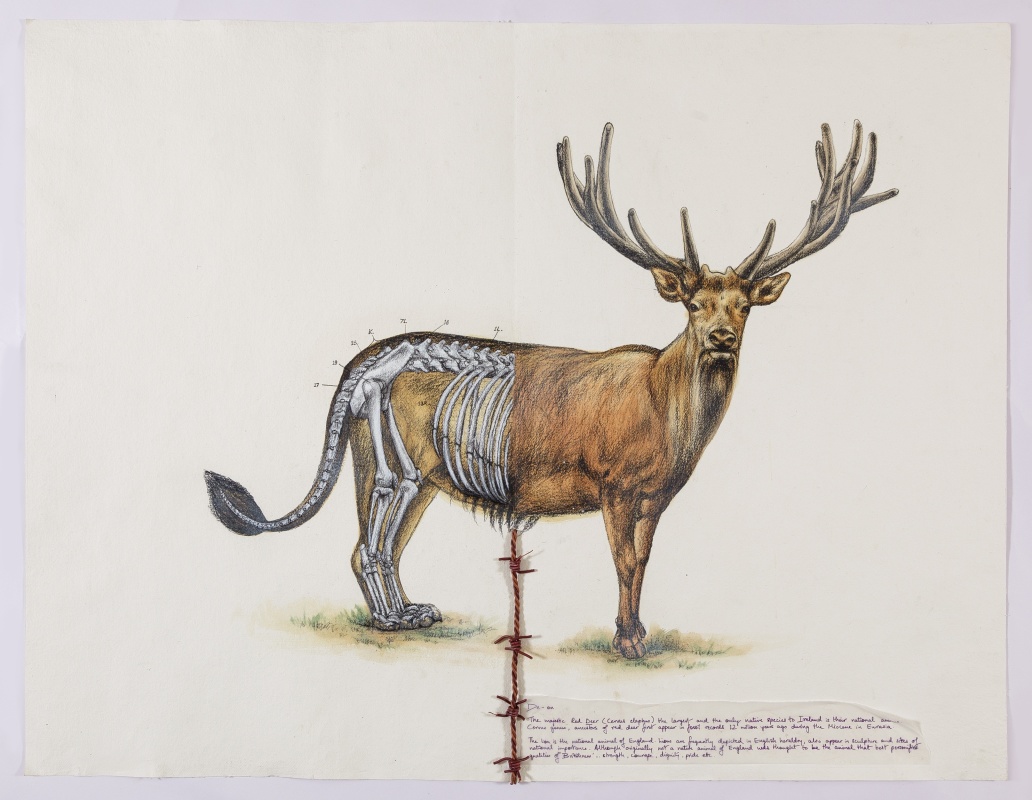
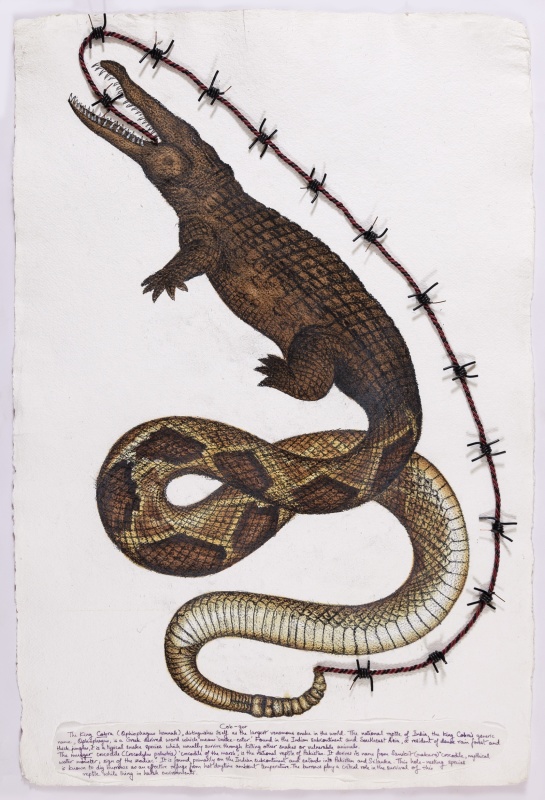
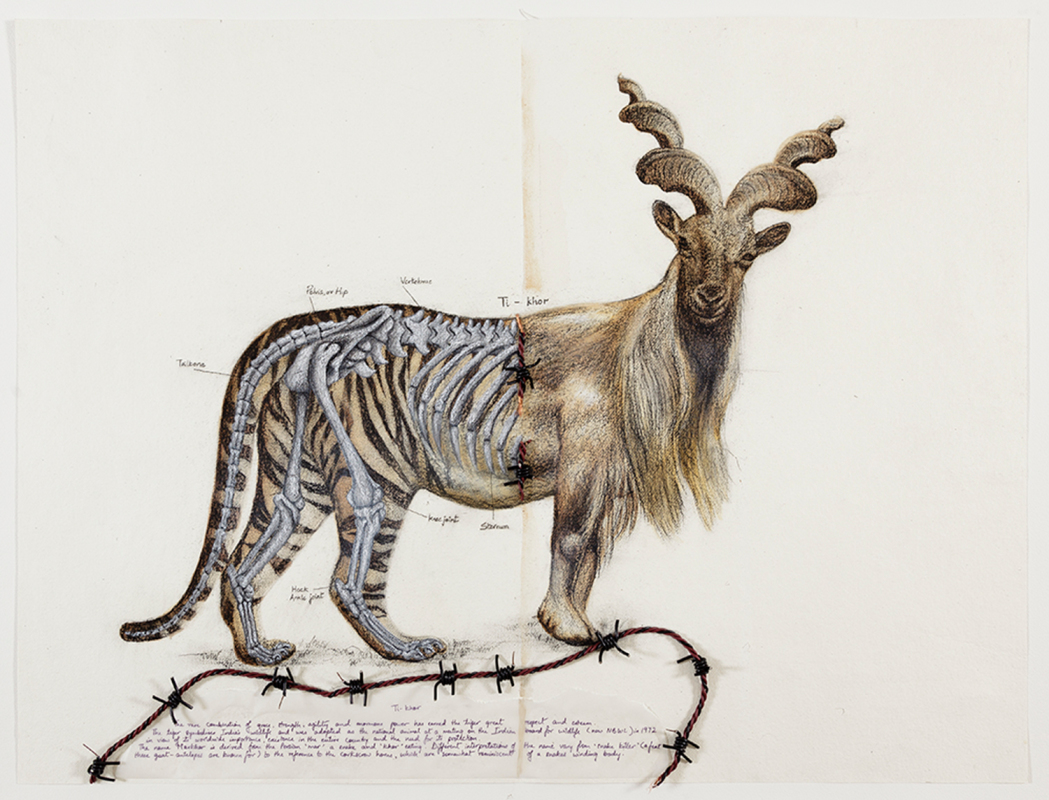
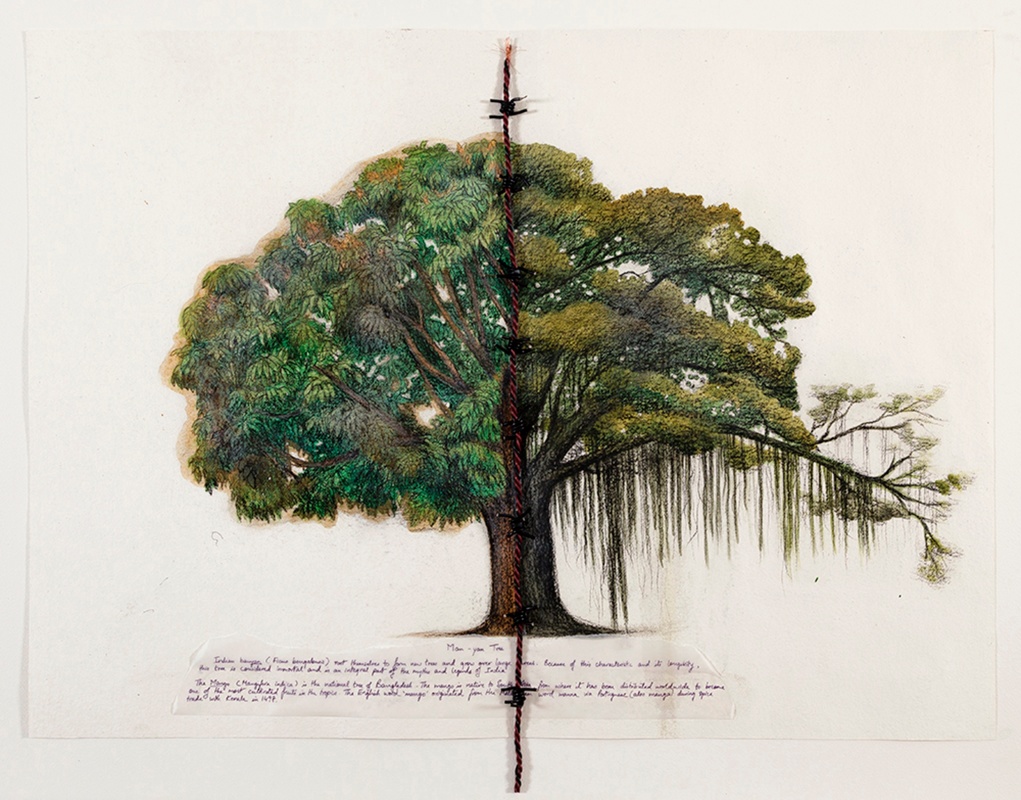
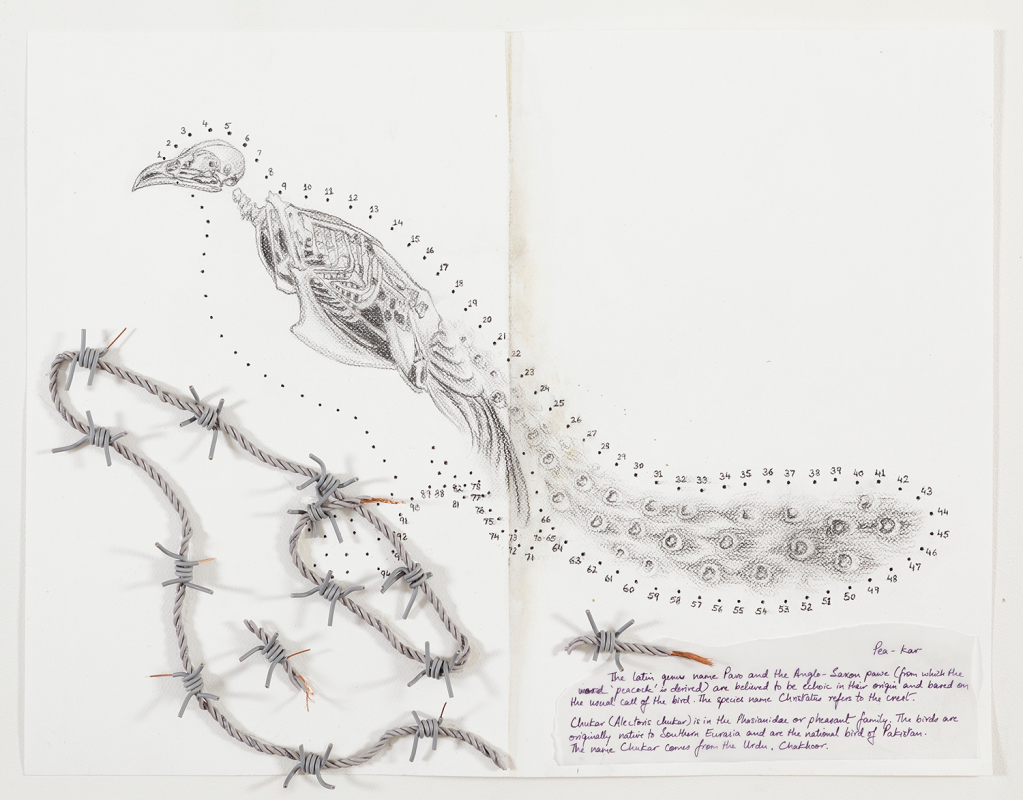
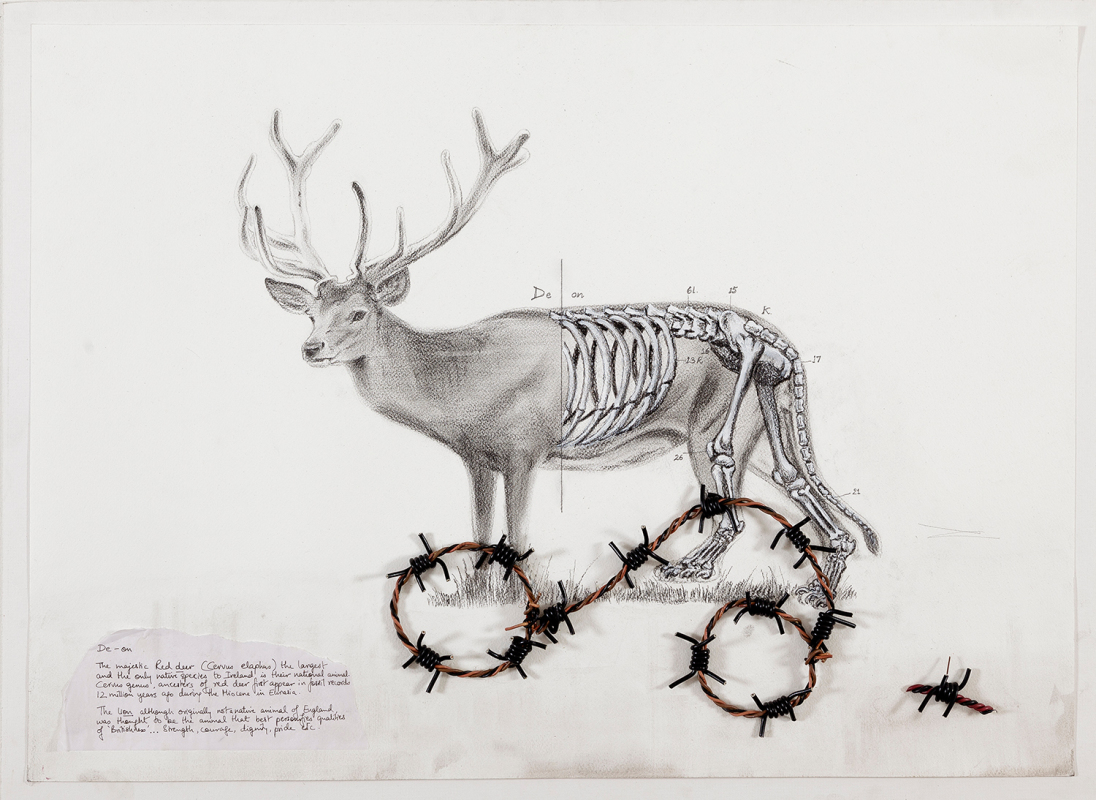
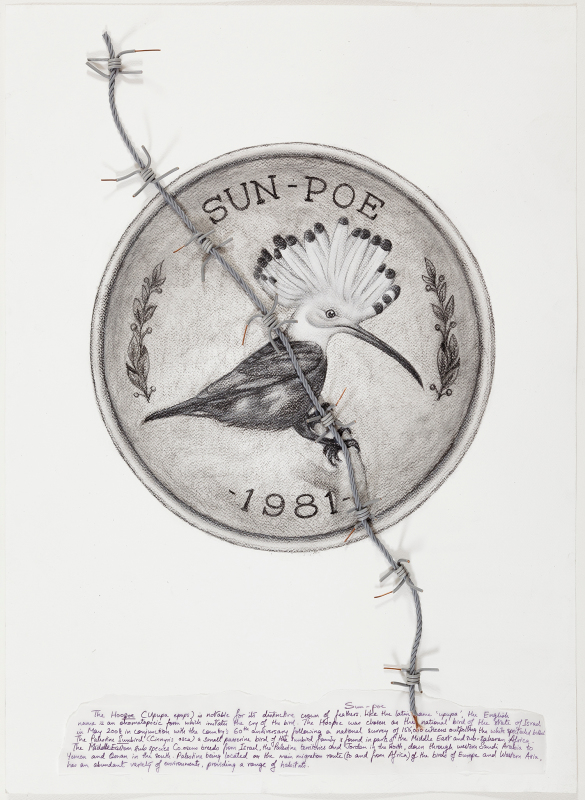
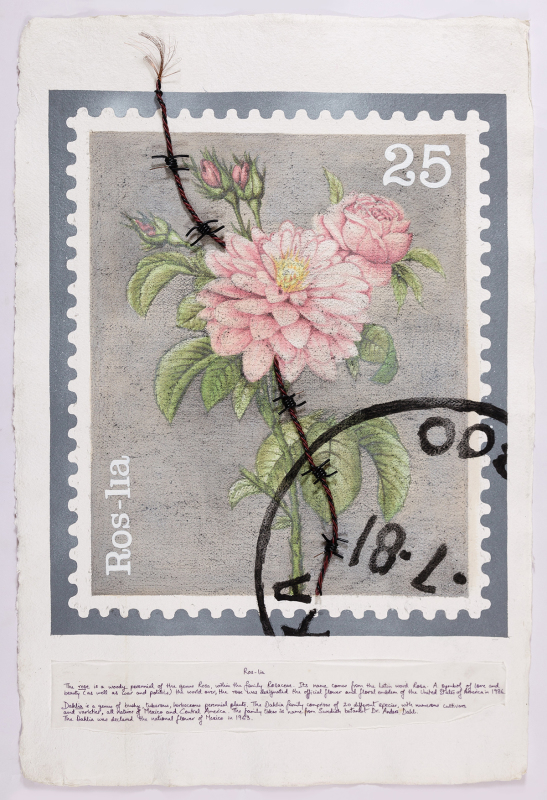
Hyphenated Lives: Painted Blackboards has three new biological beings composed by suturing the bodies of two endangered animals. It is an extension of Kallat’s ongoing preoccupation with the hyphen as a motif for uniting two conflicting symbols. Hyphenated Lives advances poetic and provocative inquiries into ideas of unison and estrangement, confluence and conflict. Strategically displayed to mimic the museum vitrine, Kallat’s ongoing body of work envisions fantastical mutations within the natural word, consequently, the invention of an unnatural, previously non-existent hybridized species of birds and animals, trees and flowers that are otherwise foregrounded as national symbols and proclaimed by nations as their own. Once combined through this symbolic surgical gesture, the new objects notionally unify the otherwise conflicted nations they represent, “as if we were taking a peek into an elapsed moment of unison in the past or from an imagined future when indeed they may re-unite.”
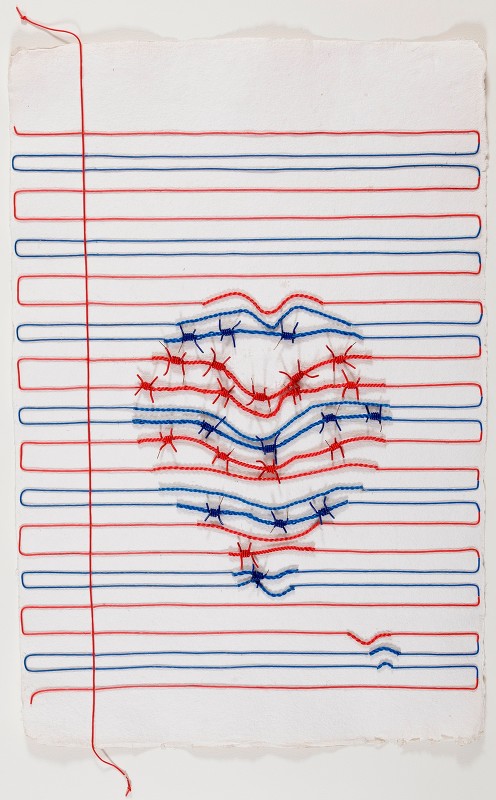
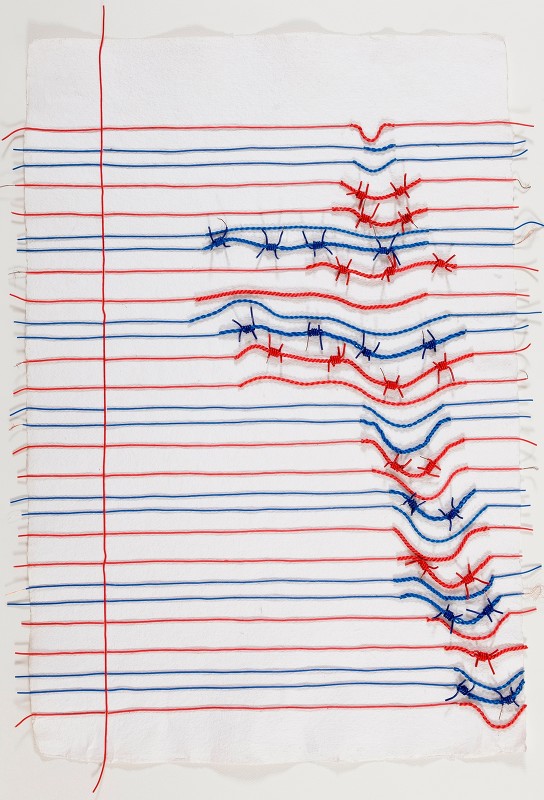
In Ruled Paper (2015), a suite of drawings, wires appear as magnified blank sheets of paper awaiting inscription while revealing a rather unsettling form of the barbed wire. “One of the central motifs as well as the primary medium in the making of these works is the electrical cable. These conduits of contact that transmit ideas and information bringing people together, become painstakingly woven entanglements that morph into barbed wires like barriers.”
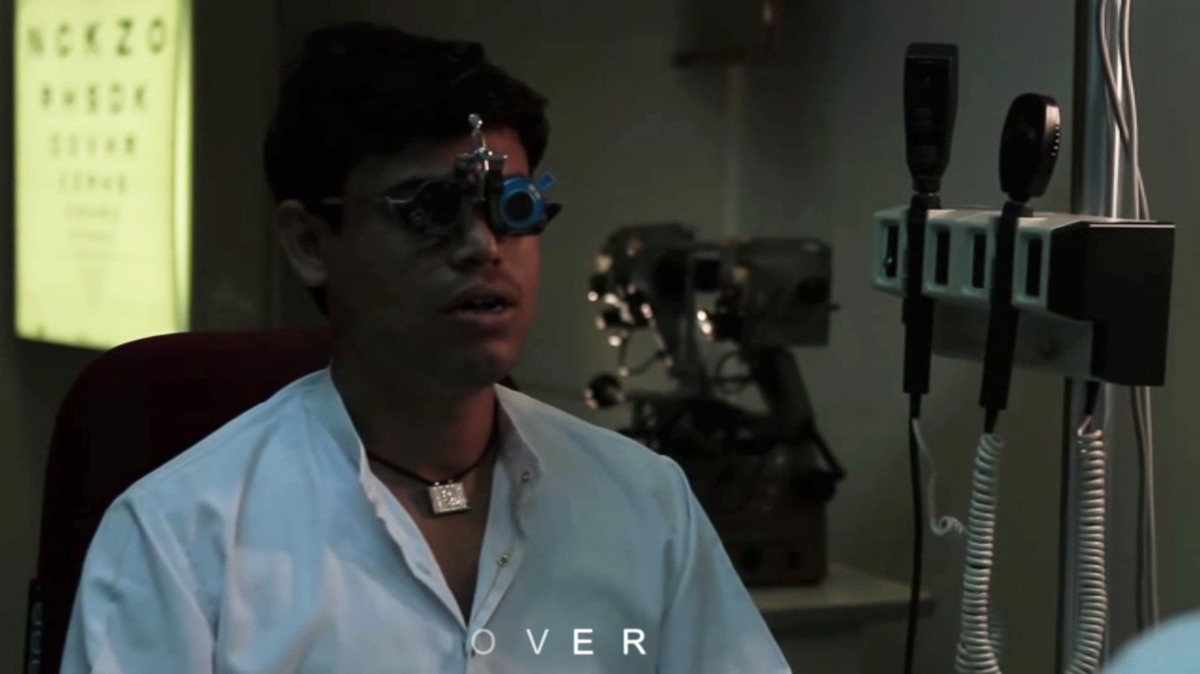
Synapse (2011) is a 9-minute, 32-second single-channel video featuring an ironic play on legibility where we witness 14 individuals’ attempts at reading the letters on a Snellen chart at an opthalmologist’s clinic. The traditional Snellen (eye chart), meant to measure visual acuity, in this case happens to have been replaced by a variation comprising the fragmented letters of the Preamble of the Indian Constitution.
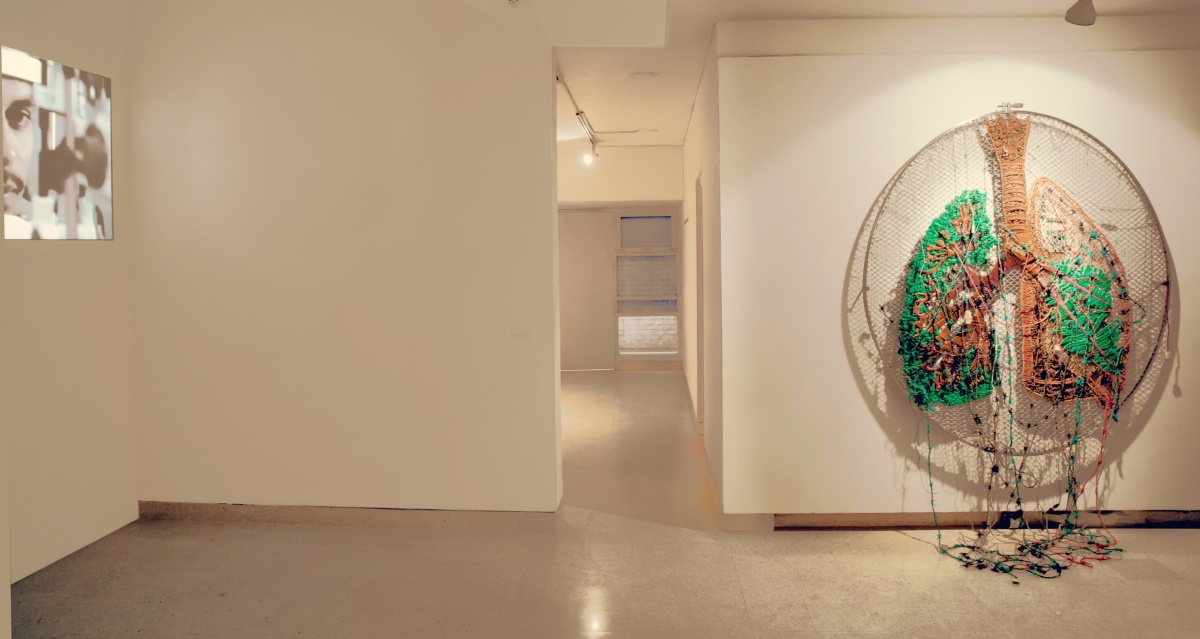
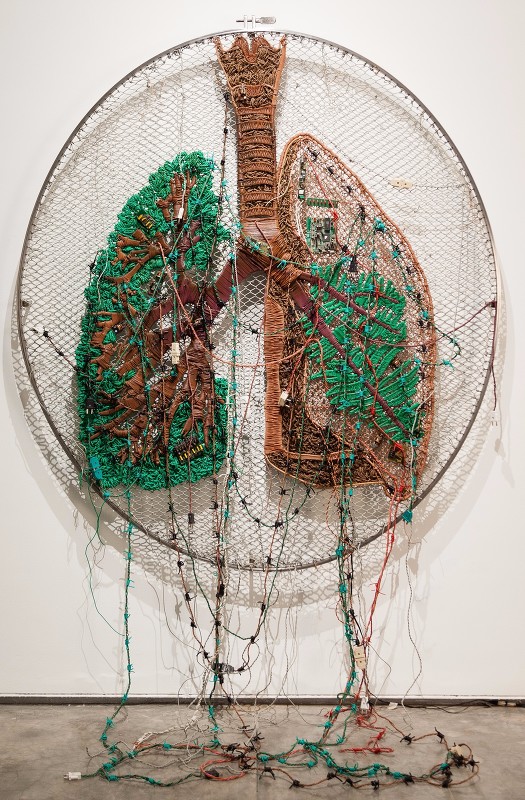
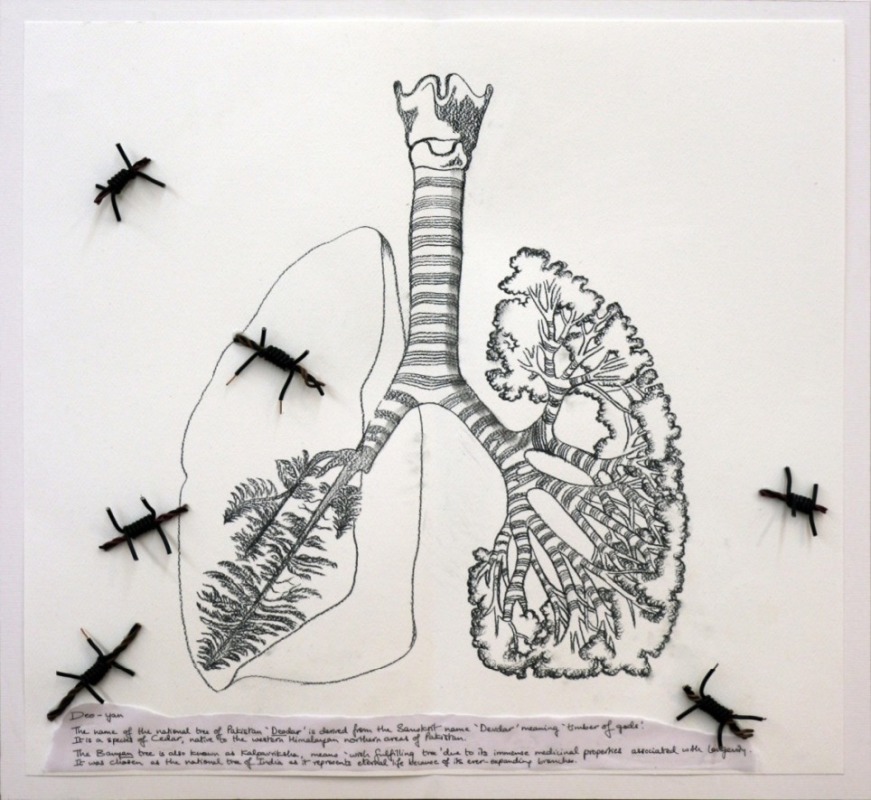
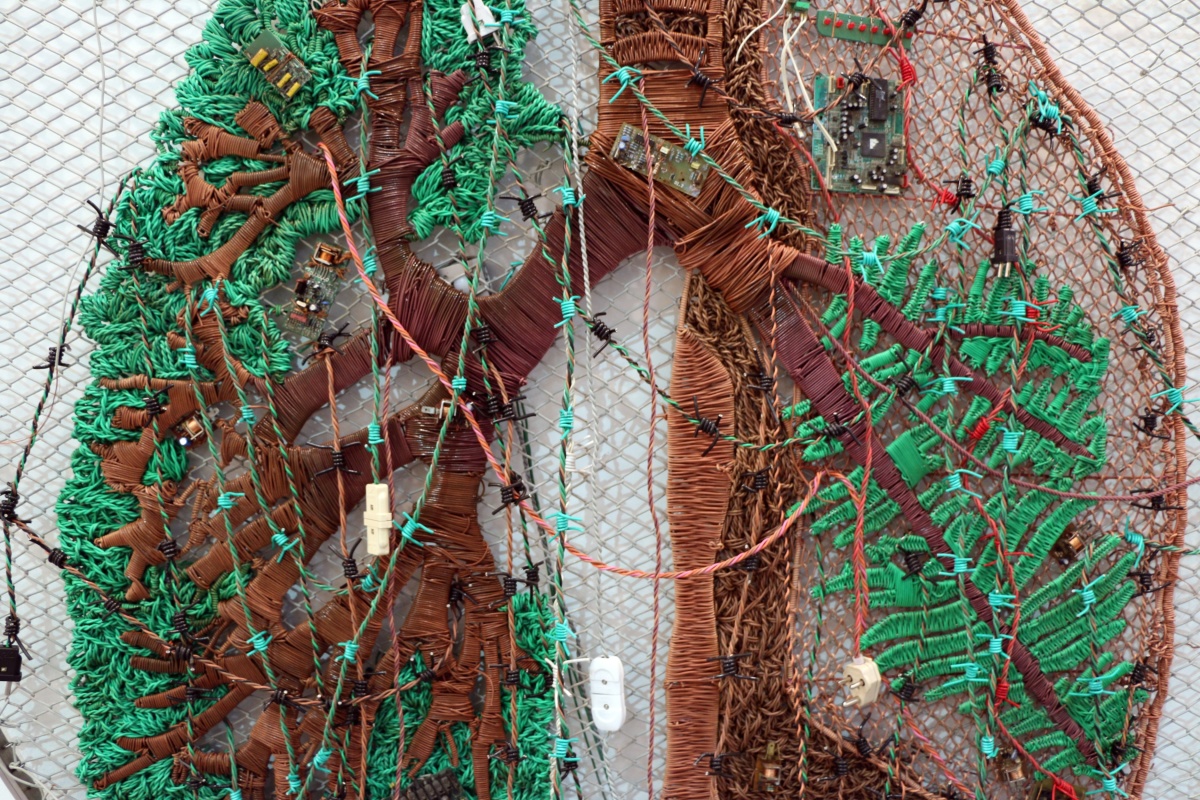
In Half Oxygen (2014), as if putting forth an analogy between the human body and nature, the Banyan tree and the Deodar tree, both designated as national trees of India and Pakistan respectively entwine to form a pair of lungs. “I often think of this conjoined form as an allusion to nature’s defiance of the artificially imposed, man-made divisions on the ground,” says Kallat.
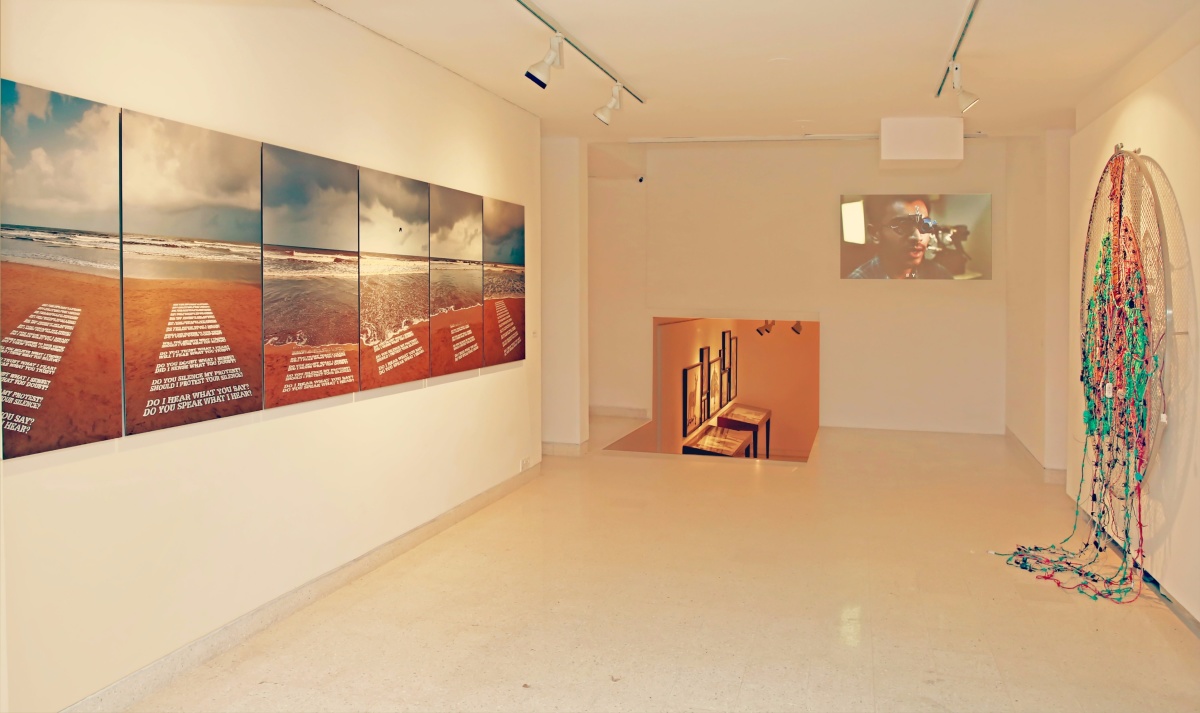
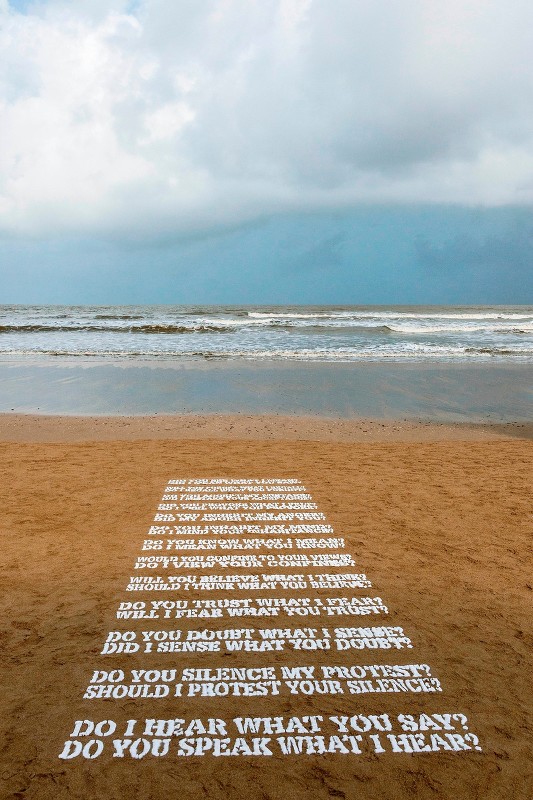
Saline Notations (Echoes) (2015) documents the erasure of a soliloquous text inscribed on the seashore using salt by the rising tide. Used as a preservative since ancient times, salt is stencilled here by Kallat to form a transient text that has an element of surrender. Kallat works closely with tidal calendars and sunset timings which form an unseen and unlikely backdrop to the fleeting presence of the salt.
Artworks
Installation Views